
Stretched Canvas Frames: The Complete Guide for Artists, Photographers & Canvas Prints
Have you ever wondered why professional paintings displayed in art galleries look perfectly flat, wrinkle-free, and ready to hang without needing a traditional picture frame? The answer lies in a stretched canvas frame—a carefully crafted wooden structure that supports the canvas from behind, providing strength, stability, and a clean, gallery-quality presentation.
Whether you are a professional artist, an art student, a photographer creating canvas prints, an interior designer decorating a space, or simply someone looking to preserve a cherished painting, choosing the right stretched canvas frame plays a vital role in the appearance and longevity of your artwork. The quality of the wood, the profile of the stretcher bars, the way the canvas is stretched, and even the corner construction all contribute to the final result.
At CanvasFrame.in, we manufacture custom stretched canvas frames for artists and businesses across India. Over the years, we’ve worked with painters, photographers, galleries, print studios, and institutions, helping them select the right frame for everything from small sketches to oversized exhibition pieces. This practical experience has shown us that many buyers struggle to find clear, trustworthy information about stretched canvas frames before making a purchase.
That’s why we created this comprehensive guide.
Instead of covering only the basics, this article brings together everything you need to know in one place—from understanding how stretched canvas frames are made to selecting the right wood profile, canvas material, frame thickness, and framing style for your specific needs. We’ll also explain common mistakes to avoid, compare popular options, and answer the questions we hear most often from our customers.
By the end of this guide, you’ll have the knowledge and confidence to choose a stretched canvas frame that not only enhances the beauty of your artwork but also protects it for years to come.
In This Guide, You'll Learn
- What a stretched canvas frame is and how it works
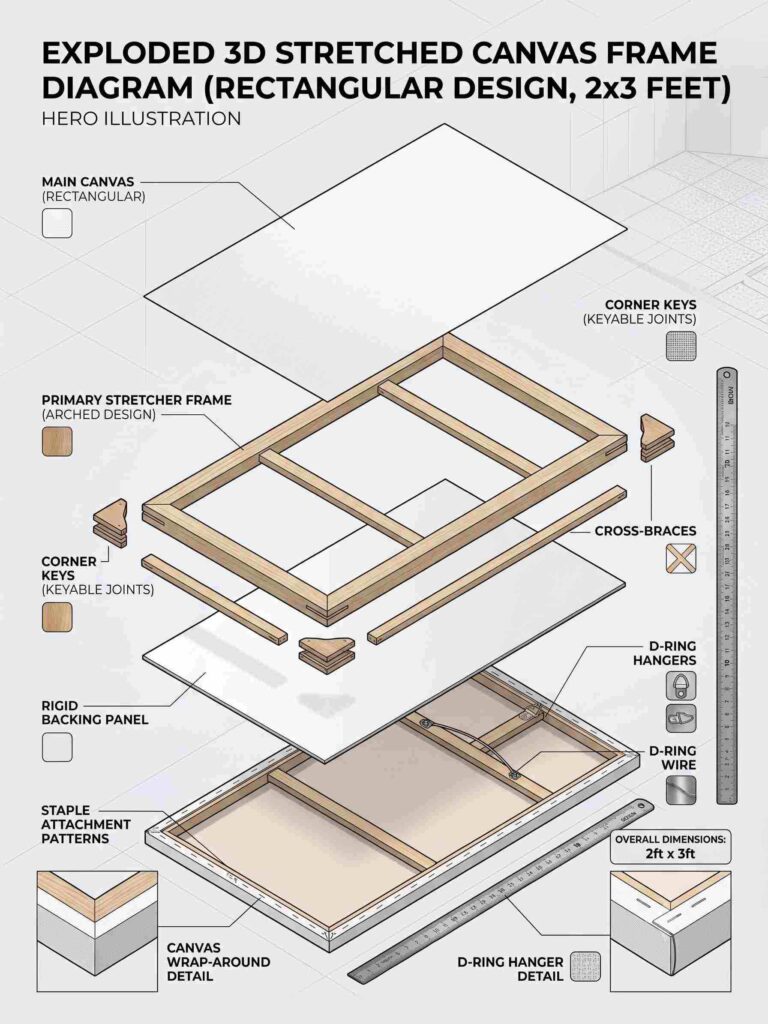
- The different parts of a stretched canvas frame
- How stretched canvas frames are manufactured
- Types of stretcher bars and their uses
- Which wood is best for canvas frames
- Cotton vs. linen canvas comparison
- Standard canvas sizes in India
- How to choose the correct frame thickness
- Gallery wrap vs. floating frame
- Tips for caring for stretched canvas artwork
- Common mistakes to avoid when buying a canvas frame
- Frequently asked questions answered by industry experts
What Is a Stretched Canvas Frame?
A stretched canvas frame is a wooden framework over which a piece of artist’s canvas is tightly stretched and secured. Unlike conventional picture frames that surround artwork from the front, a stretched canvas frame supports the artwork from behind, allowing the painted surface to remain fully visible while creating a clean, modern, gallery-style presentation.
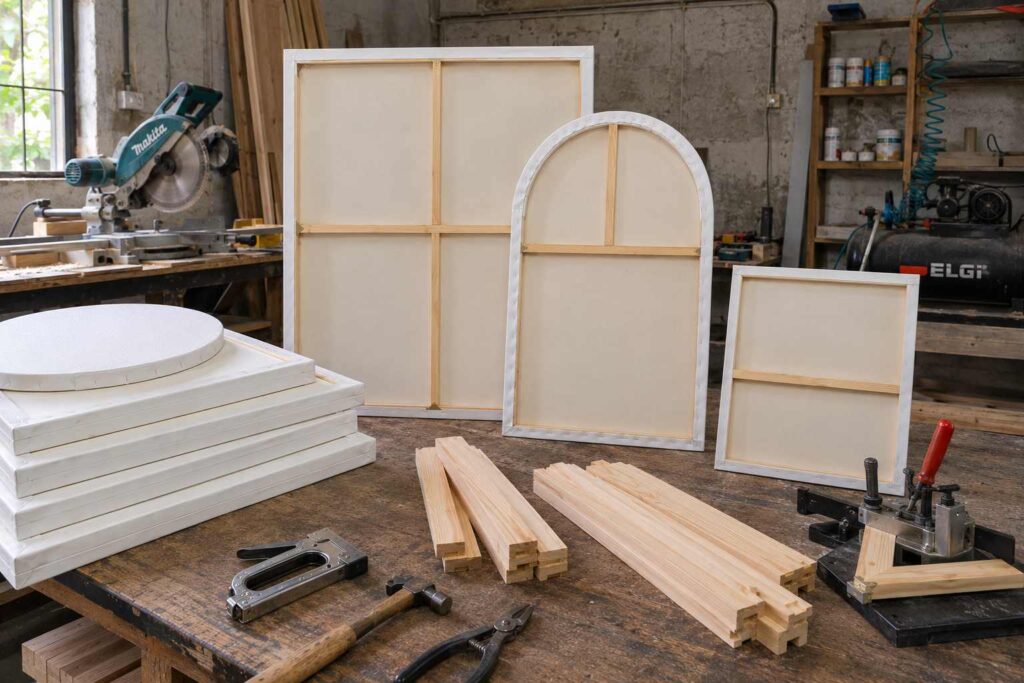
The wooden framework is typically made from specially machined stretcher bars that interlock at the corners to form a rigid square or rectangular structure. Once assembled, the canvas fabric is carefully stretched across the frame to achieve even tension on all sides before being stapled securely to the back. This process creates a smooth, wrinkle-free surface that is ideal for painting or displaying printed artwork.
One of the biggest advantages of stretched canvas frames is their versatility. They are widely used by:
- Professional artists creating oil, acrylic, and mixed-media paintings
- Art students practicing on blank canvases
- Photographers producing premium canvas prints
- Interior designers decorating homes, offices, hotels, and commercial spaces
- Art galleries and museums exhibiting original artwork
- Businesses displaying branded wall art or corporate décor
Unlike canvas boards or paper-mounted artwork, stretched canvases offer depth, durability, and a professional finish. They can be displayed as they are in a gallery wrap style or enhanced further with a floating frame for a more refined presentation.
A well-made stretched canvas frame does much more than hold a piece of fabric—it provides structural support, helps maintain canvas tension over time, reduces the risk of warping, and ensures that the artwork remains visually appealing for many years.
For artists who value both presentation and preservation, investing in a high-quality stretched canvas frame is one of the most important decisions they can make.
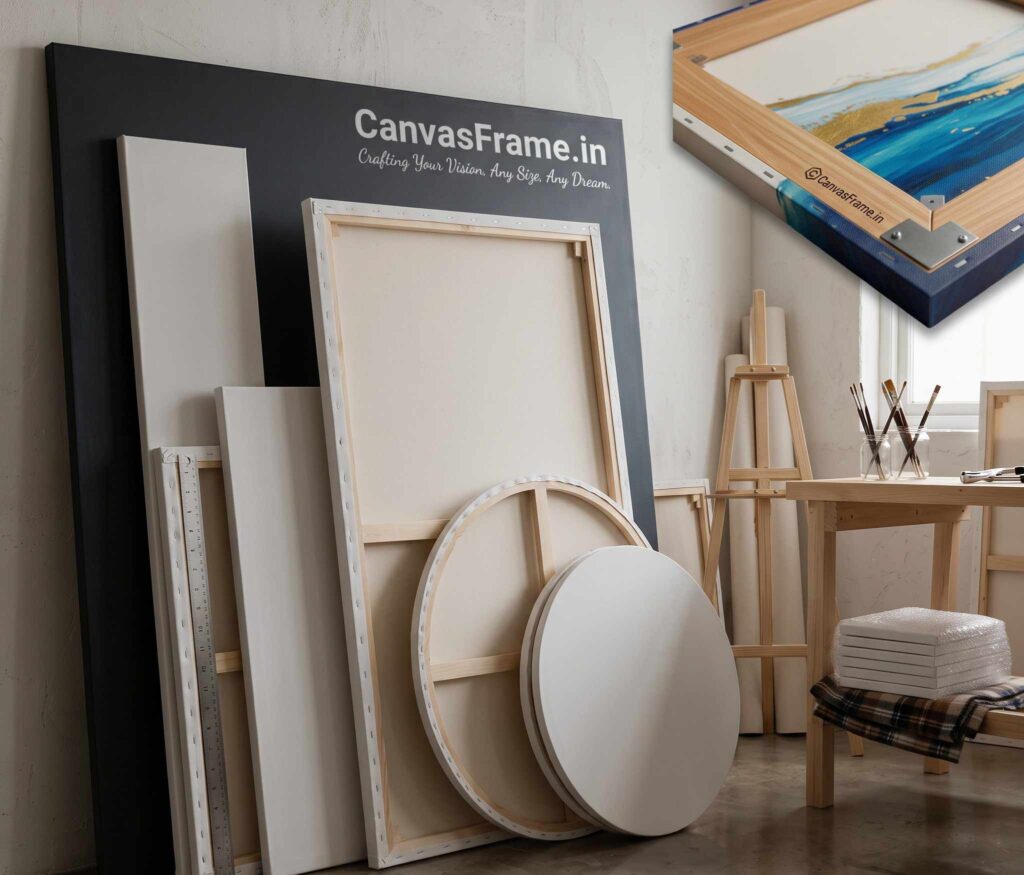
💡 Why It Matters
A high-quality stretched canvas frame does much more than hold a piece of fabric. It provides structural support, maintains even tension across the canvas, prevents sagging over time, and creates a professional presentation suitable for exhibitions, galleries, and long-term display. Investing in a well-made frame also helps reduce the risk of warping and extends the life of your artwork.
Who Uses Stretched Canvas Frames?
Stretched canvas frames are used across the art and design industry because they combine durability, versatility, and a professional appearance. Some of the most common users include:
- Professional Artists creating original oil, acrylic, and mixed-media paintings.
- Art Students learning painting techniques on a reliable surface.
- Photographers producing premium-quality canvas prints for clients.
- Interior Designers decorating homes, offices, hotels, restaurants, and commercial spaces.
- Art Galleries and Museums displaying original artwork with a clean, contemporary presentation.
- Canvas Print Businesses stretching printed canvases before delivery.
- Corporate Offices installing branded artwork and decorative wall panels.
- Homeowners looking to showcase family portraits, travel photographs, or custom artwork.
What Are Stretcher Bars? Complete Guide
Anatomy of a Stretched Canvas Frame
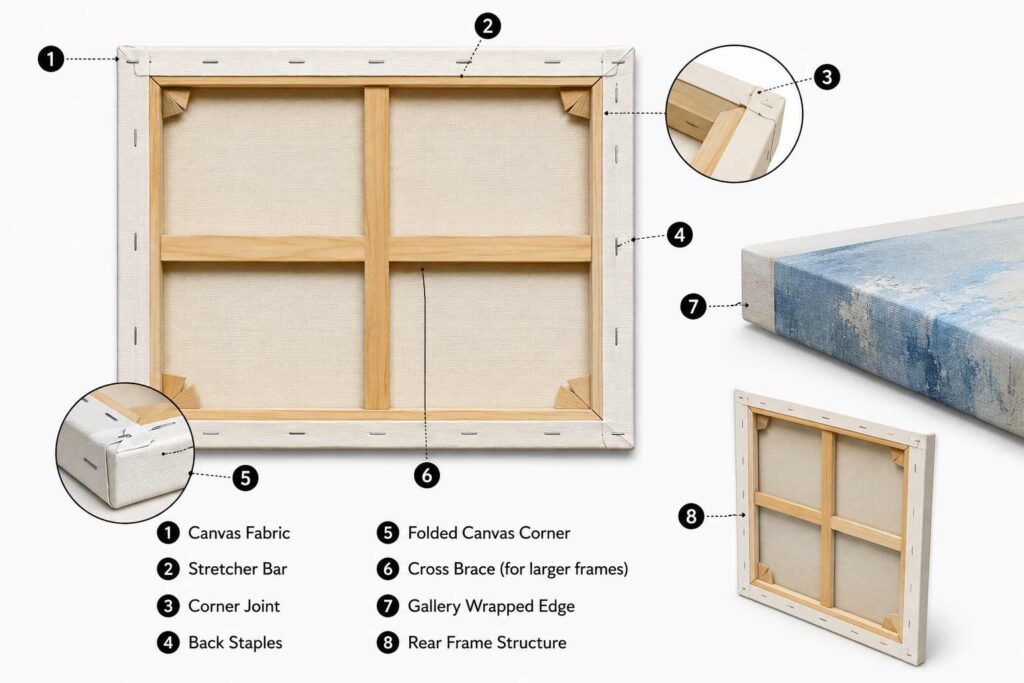
A stretched canvas frame may appear simple from the outside, but it is made up of several carefully engineered components that work together to create a strong, durable, and perfectly tensioned surface for artwork. Understanding these parts will help you choose the right frame for your painting, canvas print, or custom artwork.
Each component has a specific purpose. From the wooden stretcher bars that form the frame to the canvas fabric stretched across the front, every element contributes to the frame’s strength, stability, and longevity. A high-quality stretched canvas frame is designed to resist warping, maintain even canvas tension, and provide a professional finish that lasts for years.
Let’s take a closer look at each part.
🪵 Stretcher Bars
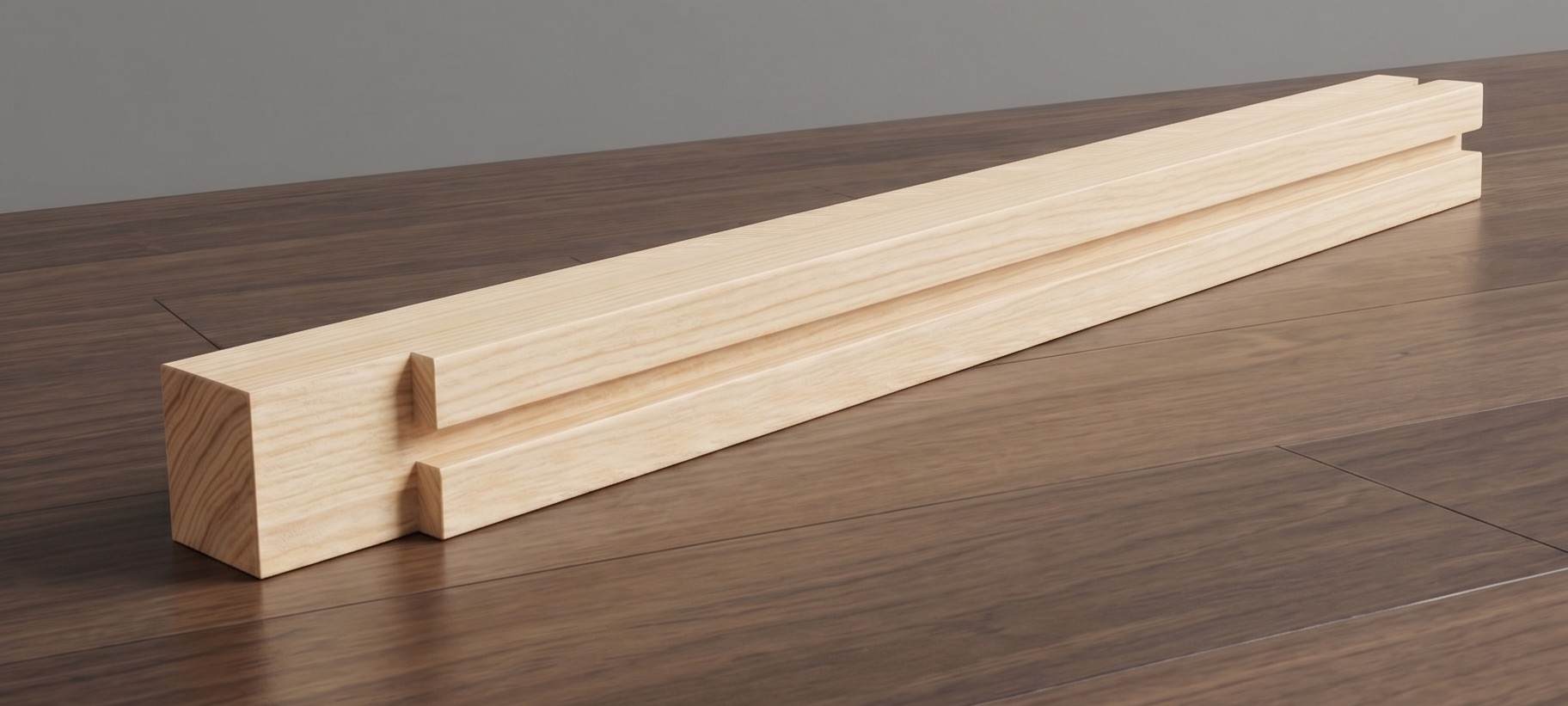
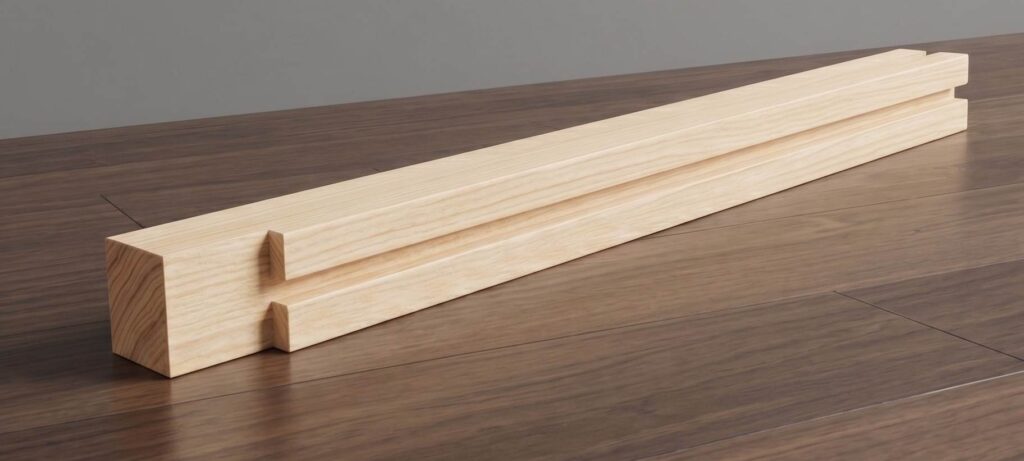
The stretcher bar is the backbone of a stretched canvas frame. These precision-cut wooden bars interlock at the corners to create a rigid frame that supports the canvas. High-quality stretcher bars are made from seasoned wood to minimise warping and ensure long-term stability.
🎨 Canvas Fabric
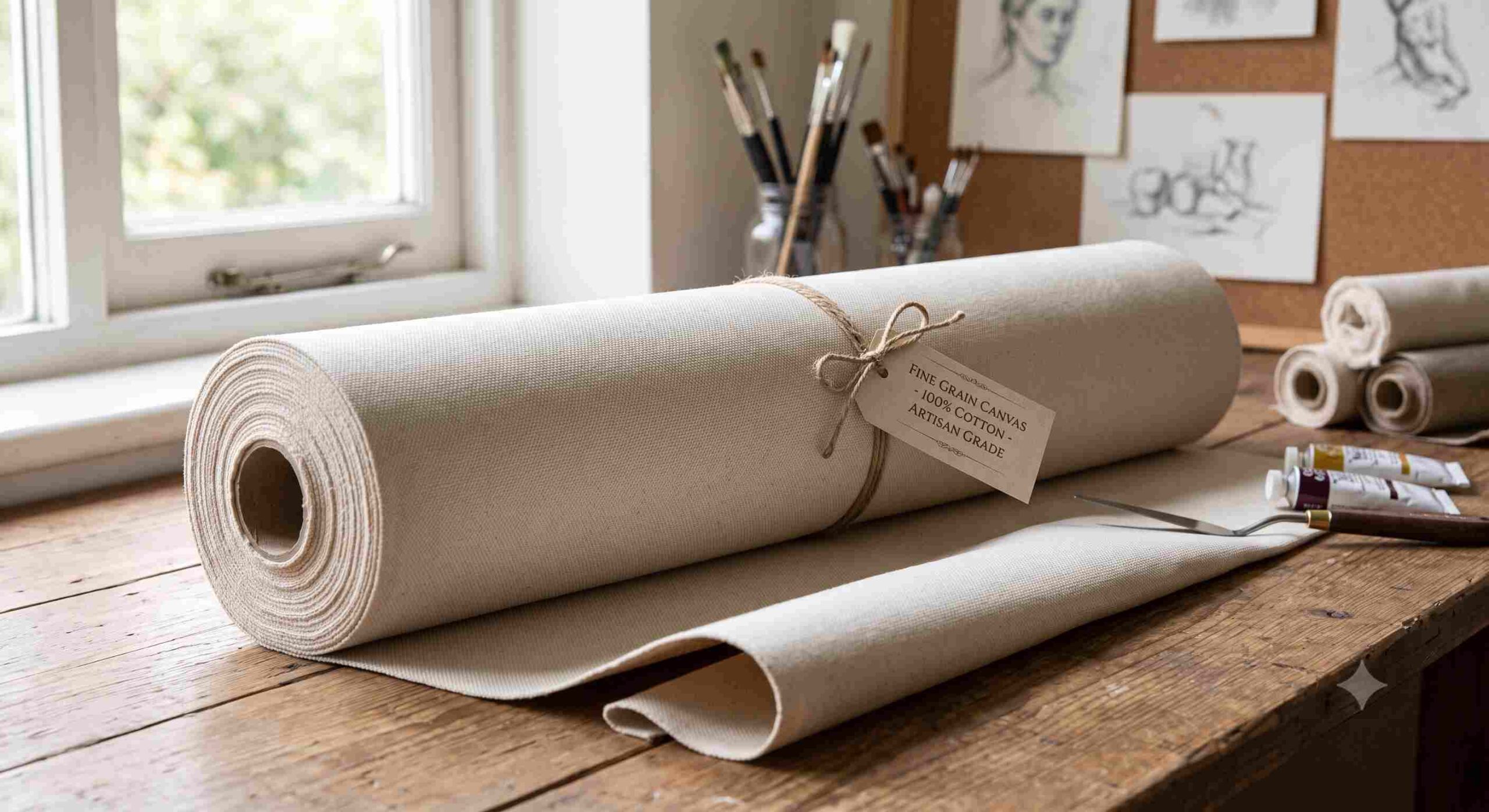
The canvas fabric is stretched tightly over the wooden frame to create a smooth, paint-ready surface. Cotton canvas is widely used for everyday artwork, while linen canvas is preferred for museum-quality paintings because of its exceptional strength and longevity.
🔲 Corner Joints
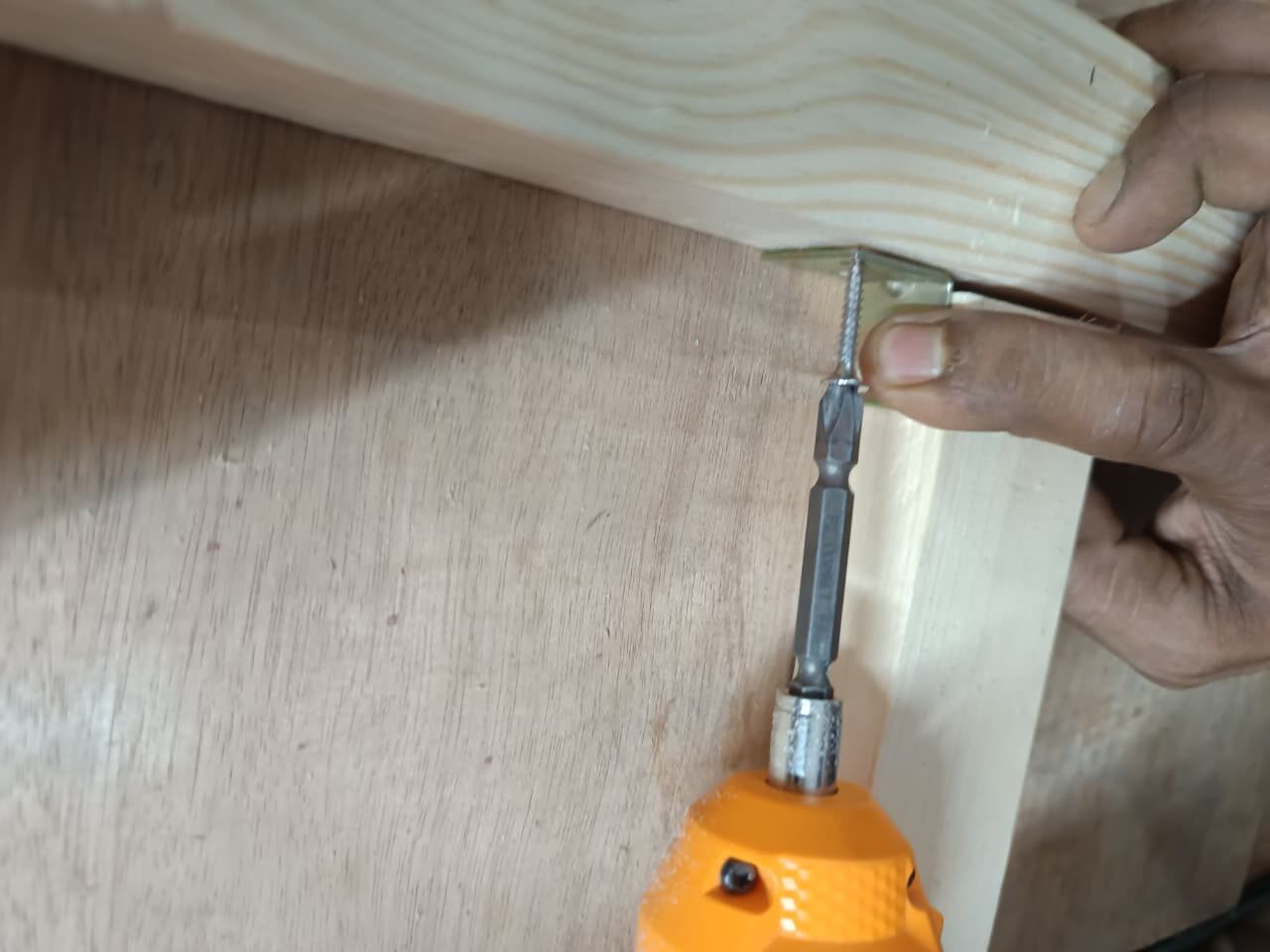
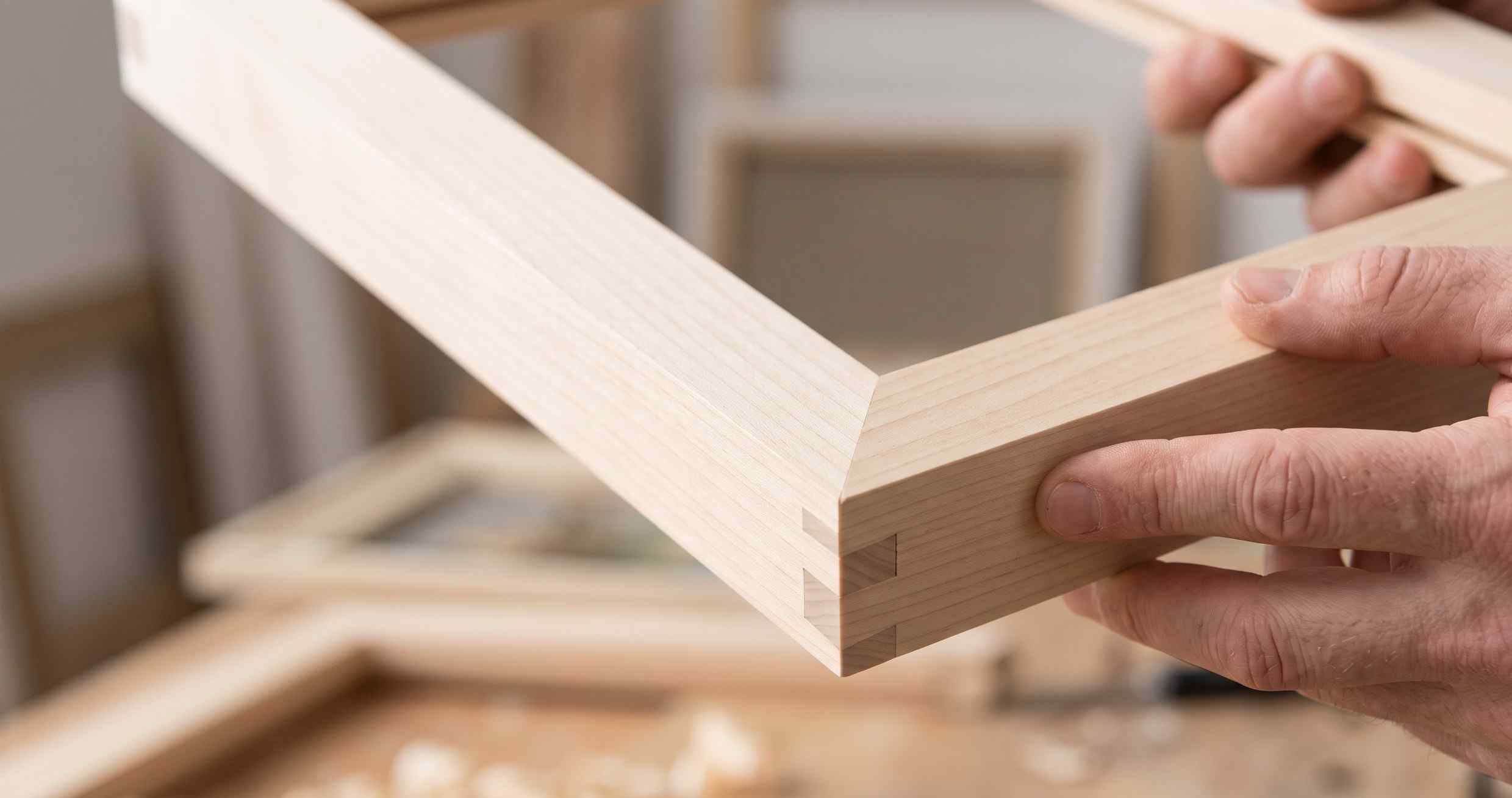
Corner joints connect the stretcher bars together. Well-machined joints create a perfectly square frame while allowing the canvas to remain evenly tensioned.
📌 Staples
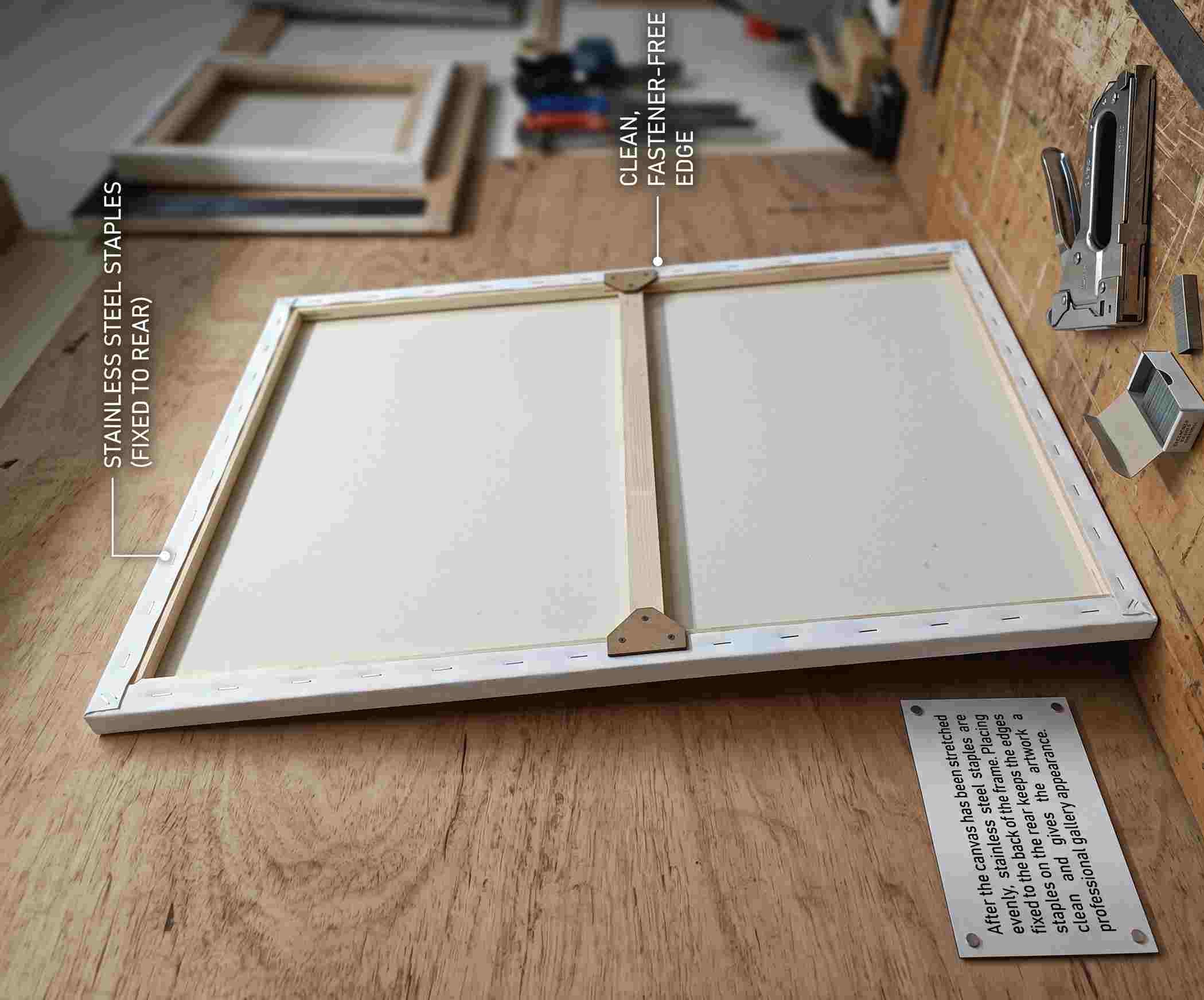
After the canvas has been stretched evenly, stainless steel staples are fixed to the back of the frame. Placing the staples on the rear keeps the edges clean and gives the artwork a professional gallery appearance.
📐 Folded Corners
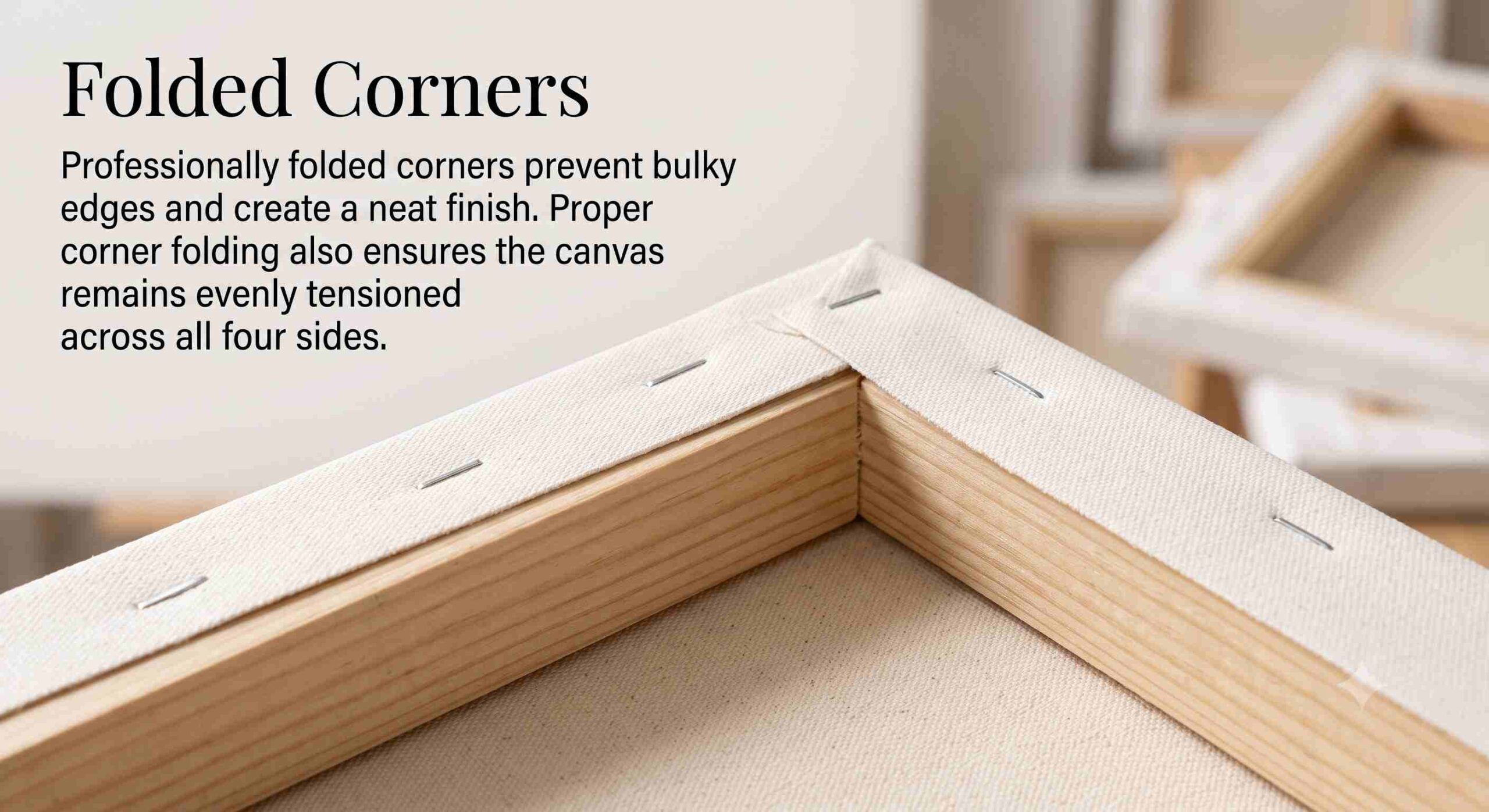
Professionally folded corners prevent bulky edges and create a neat finish. Proper corner folding also ensures the canvas remains evenly tensioned across all four sides.
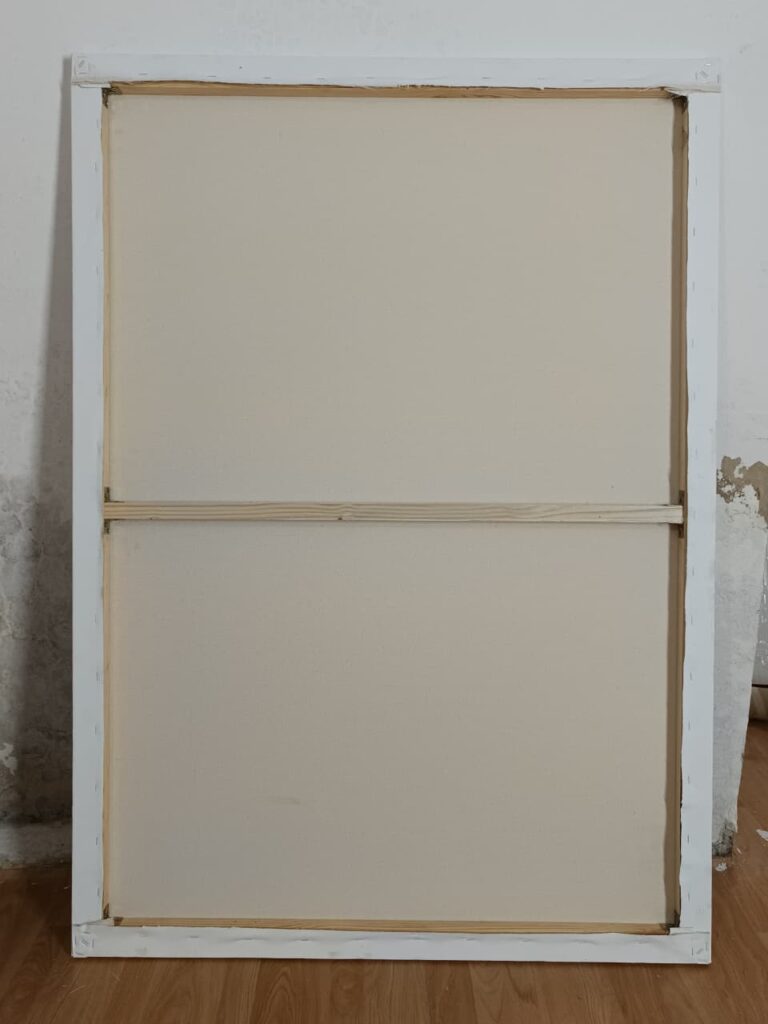
➕ Cross Braces
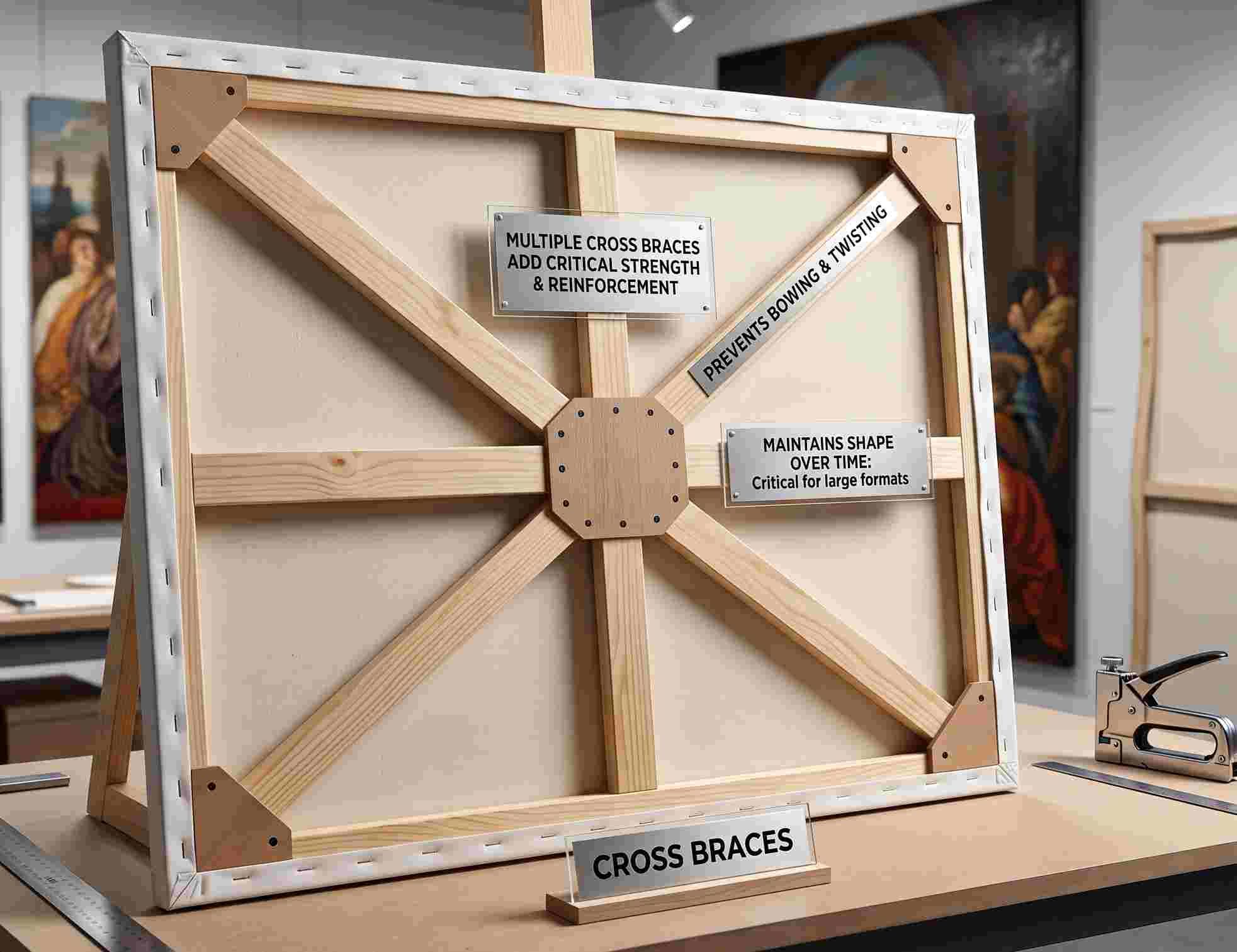
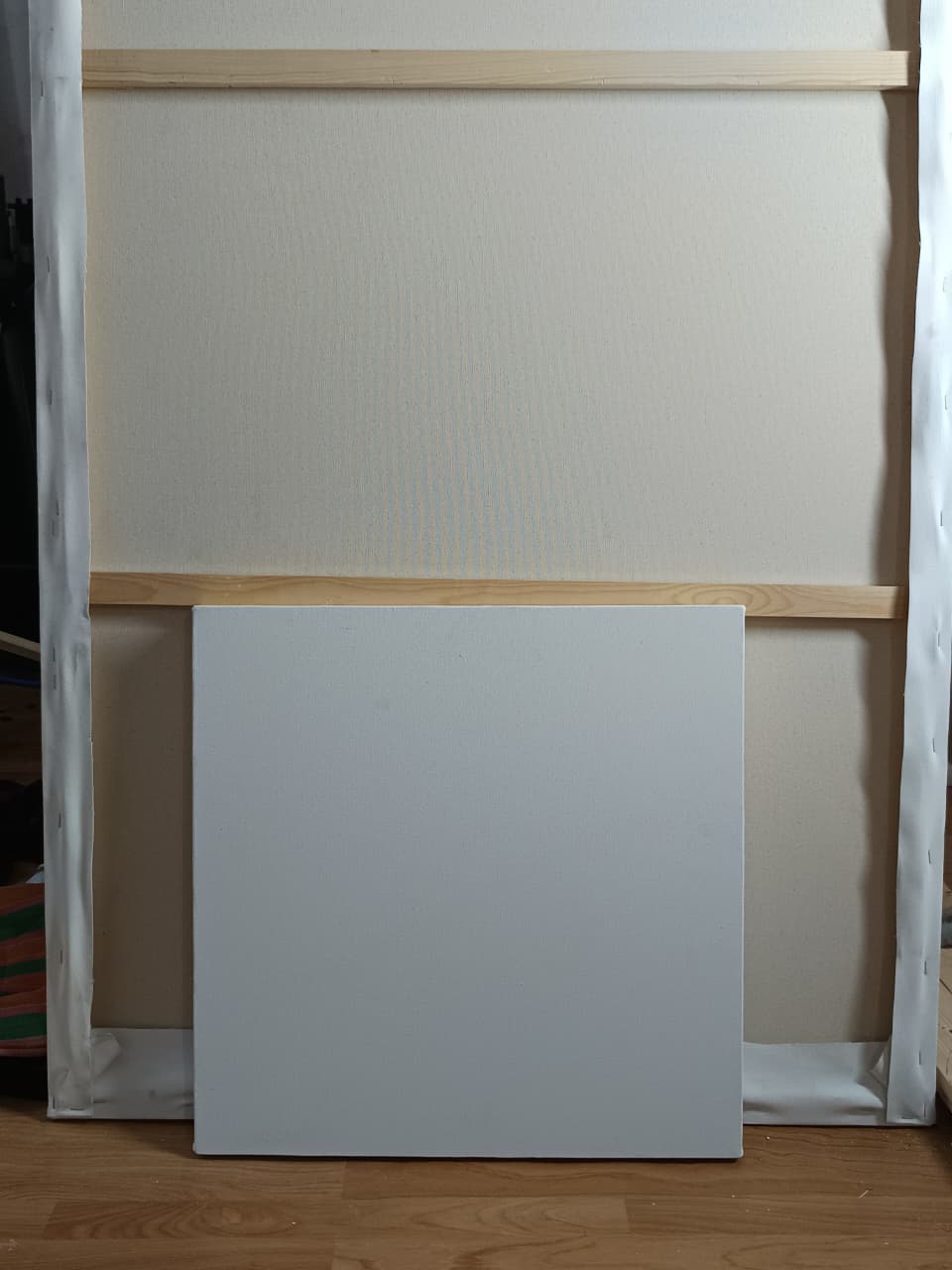
Large stretched canvases require additional support to prevent twisting or bowing. Cross braces reinforce the frame, making it significantly stronger while helping the canvas maintain its shape over time.
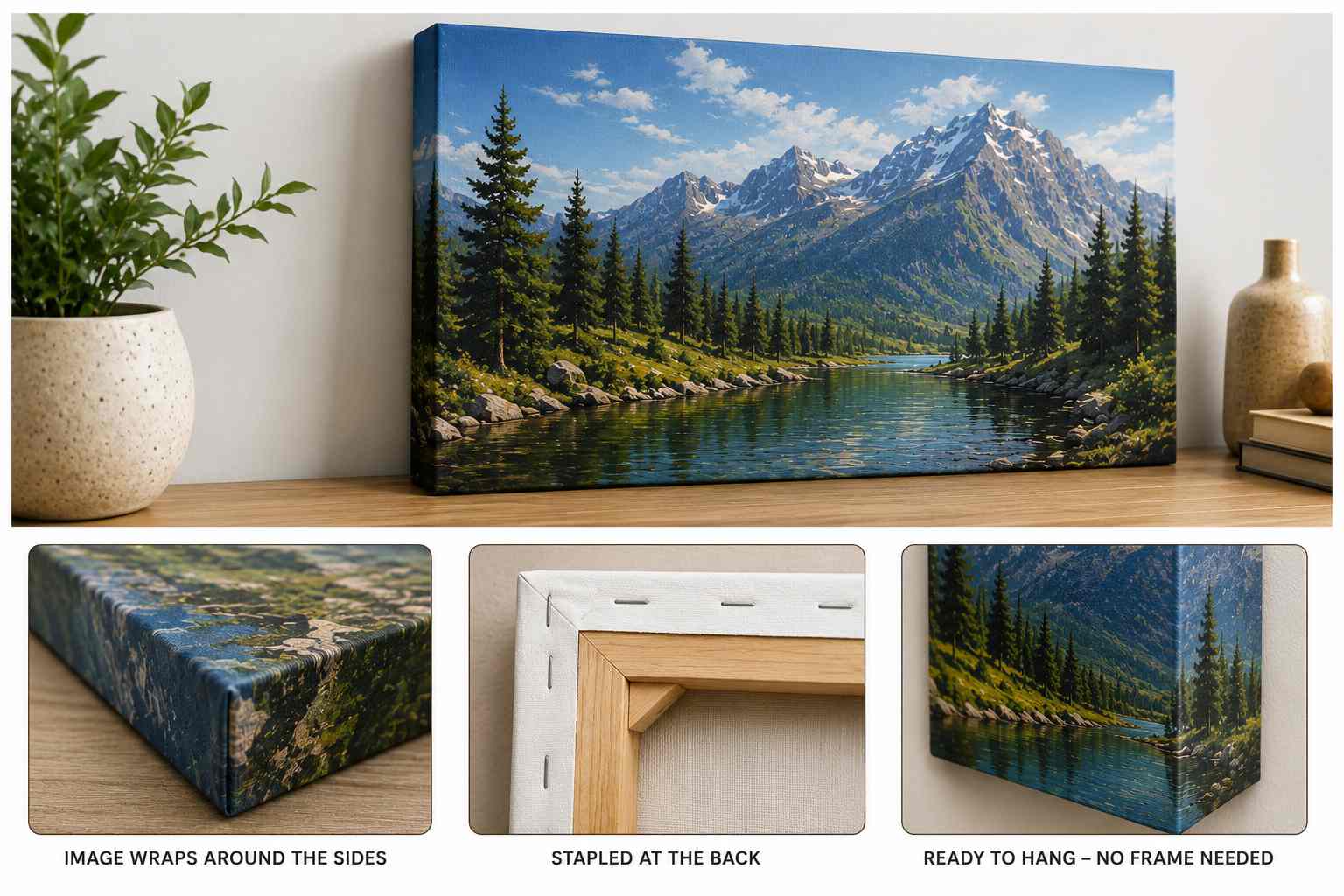
🖼 Gallery Wrap
In a gallery wrap, the canvas extends around the sides of the stretcher bars and is stapled at the back. This allows the artwork to be displayed without an external picture frame, giving it a clean, contemporary appearance.
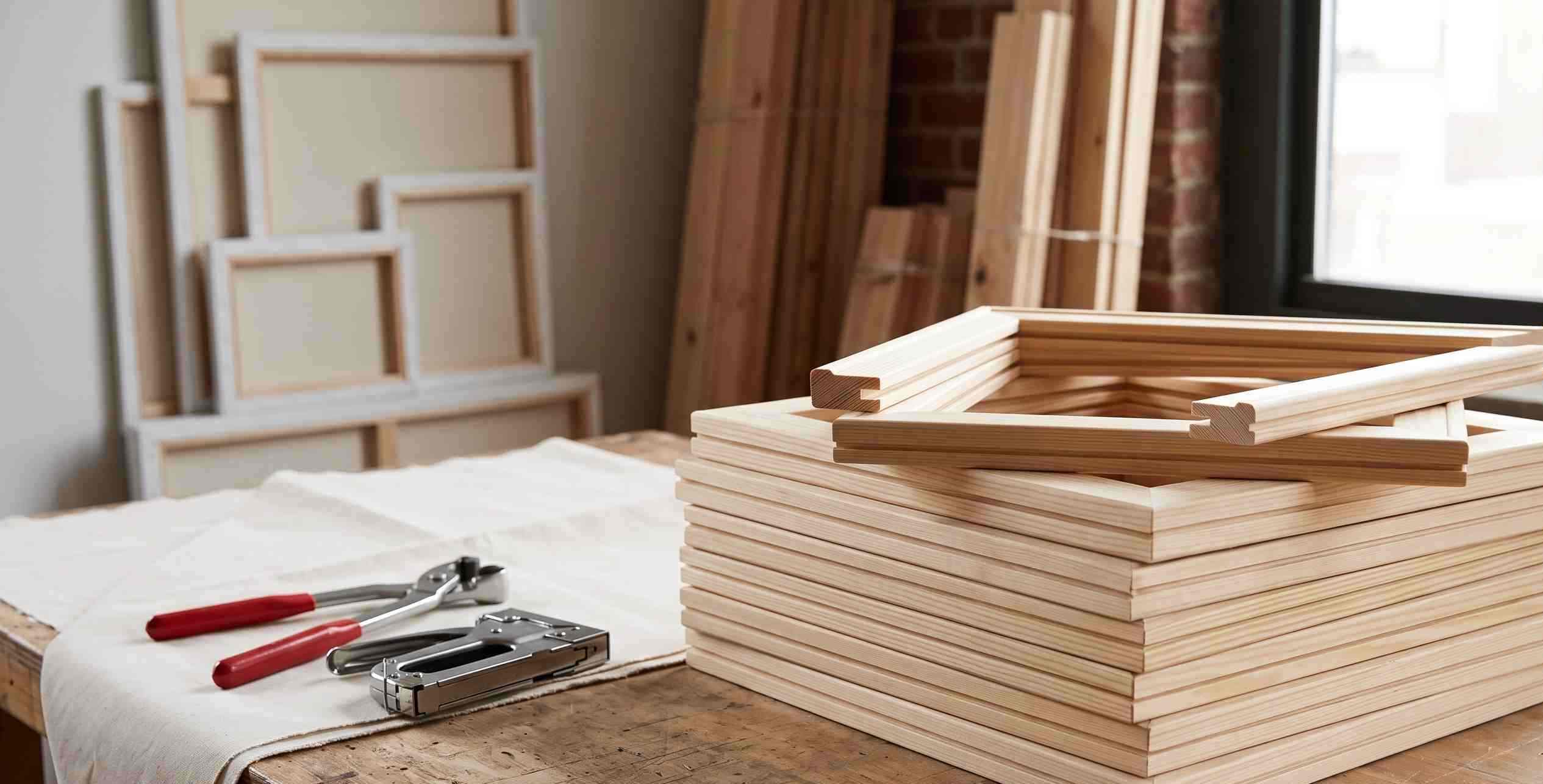
🌳 Seasoned Wood
The quality of the wood is one of the most important factors in the durability of a stretched canvas frame. Properly seasoned timber has a lower moisture content, reducing the chances of shrinking, expanding, or warping due to changes in humidity.
💡 Expert Tip
When comparing stretched canvas frames, don’t focus only on the canvas fabric. The quality of the stretcher bars, precision of the corner joints, and moisture content of the wood have a much greater impact on how well the frame performs over time. A well-built frame keeps the canvas tight, resists warping, and protects your artwork for years.
How Is a Stretched Canvas Frame Made?
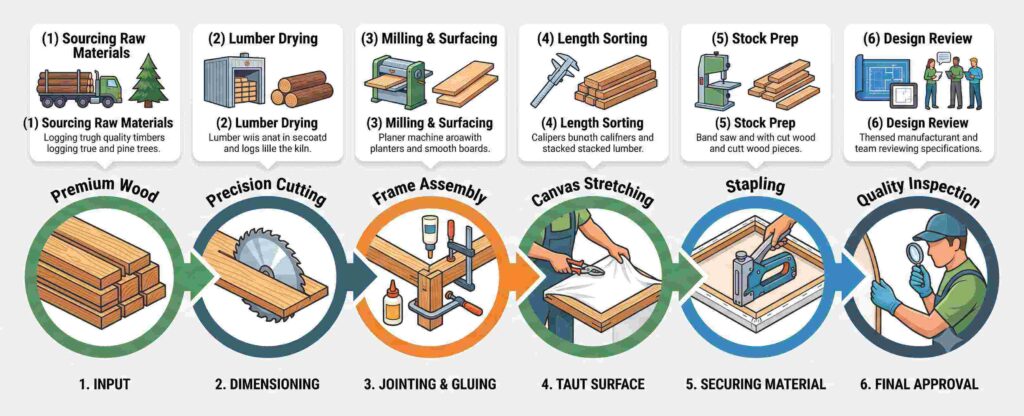
A premium stretched canvas frame is the result of precision craftsmanship rather than simple assembly. Every stage—from selecting the wood to applying the final canvas tension—plays a crucial role in the strength, appearance, and lifespan of the finished frame.
At CanvasFrame.in, we believe that a high-quality frame begins with quality materials and careful workmanship. Well-seasoned wood, accurate cutting, precise joints, and even canvas tension all contribute to a frame that stays straight, remains tight, and beautifully supports your artwork for years.
Let’s walk through each step of the manufacturing process.
Selecting Premium Wood
Every high-quality stretched canvas frame begins with carefully selected wood. Premium stretcher bars are manufactured from seasoned timber with a controlled moisture content, helping minimise expansion, shrinkage, and warping caused by humidity changes.
Straight-grain wood with minimal knots provides better structural stability, especially for larger canvas sizes. Choosing the right timber is one of the most important factors in ensuring a frame remains strong and true over time.
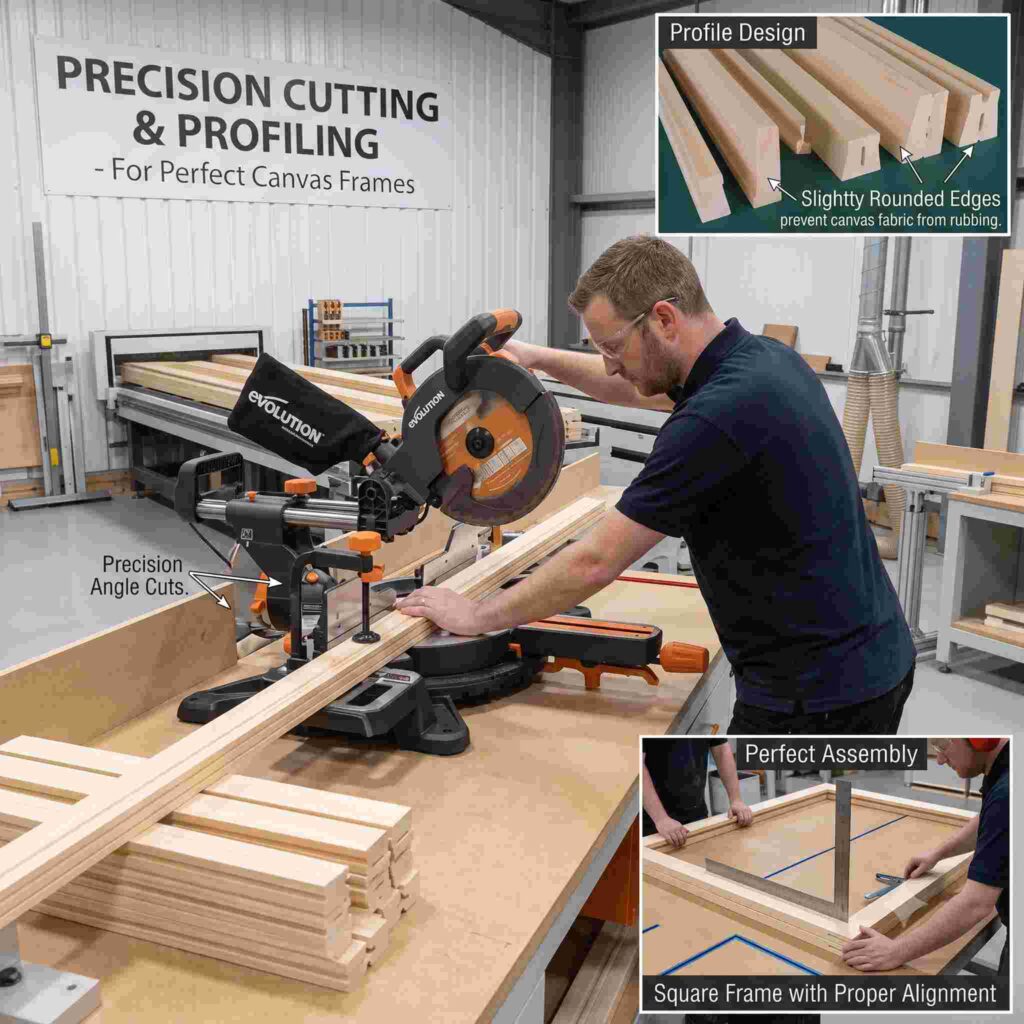
Precision Cutting & Profiling
The selected timber is cut into accurately measured stretcher bars using precision woodworking equipment. Each profile is designed to provide the right balance of strength and weight, while slightly rounded edges help prevent the canvas fabric from rubbing against sharp corners.
Accurate machining ensures that every bar fits together perfectly, creating a square frame that maintains proper alignment.
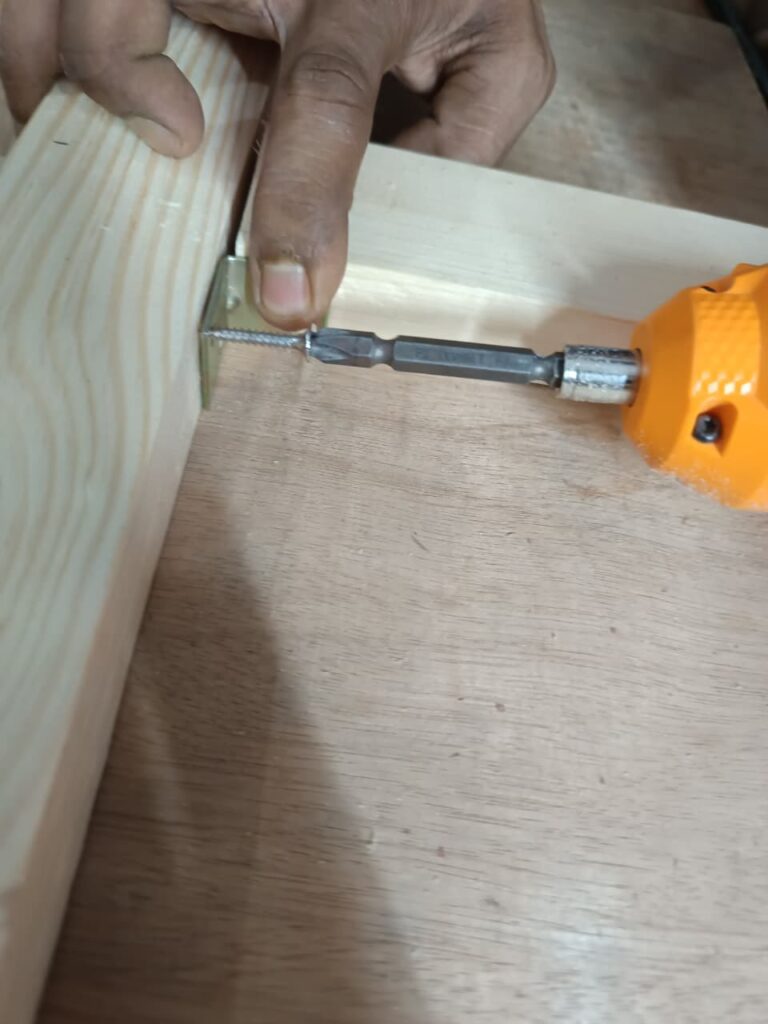
Frame Assembly
The individual stretcher bars are joined together using specially designed interlocking corner joints. These precision joints allow the frame to remain rigid while making assembly quick and accurate.
For larger canvas sizes, additional cross braces are installed to improve structural strength and reduce the risk of twisting or bowing.
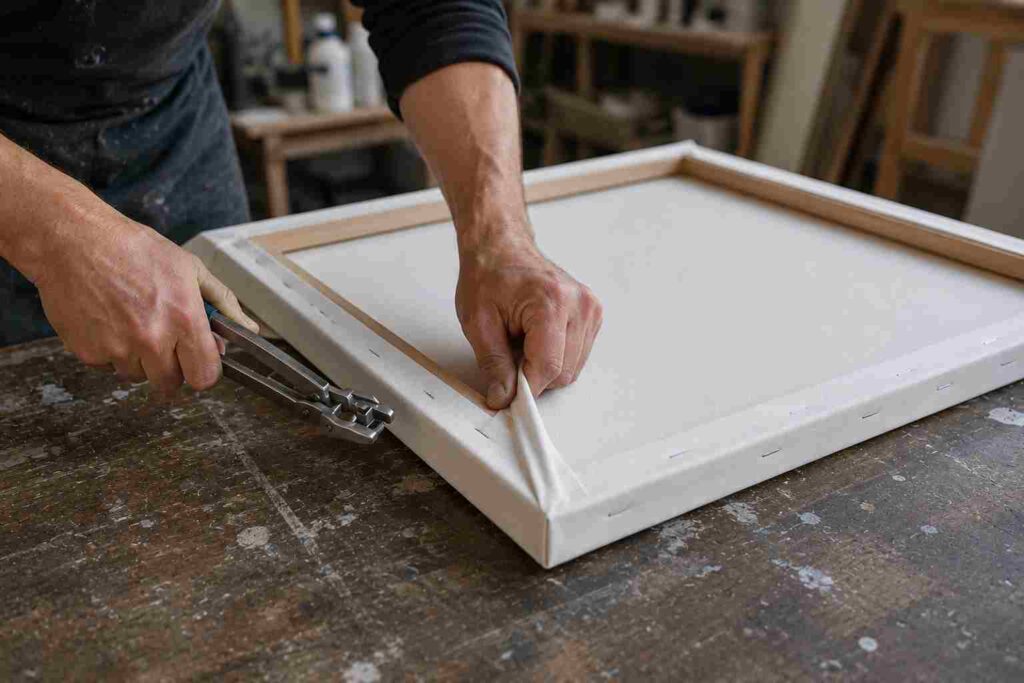
Stretching the Canvas
The canvas fabric is positioned over the assembled frame and stretched evenly from all four sides. Maintaining uniform tension is essential for creating a smooth painting surface without wrinkles or sagging.
Professional canvas stretching follows a balanced sequence to distribute tension evenly across the entire frame.
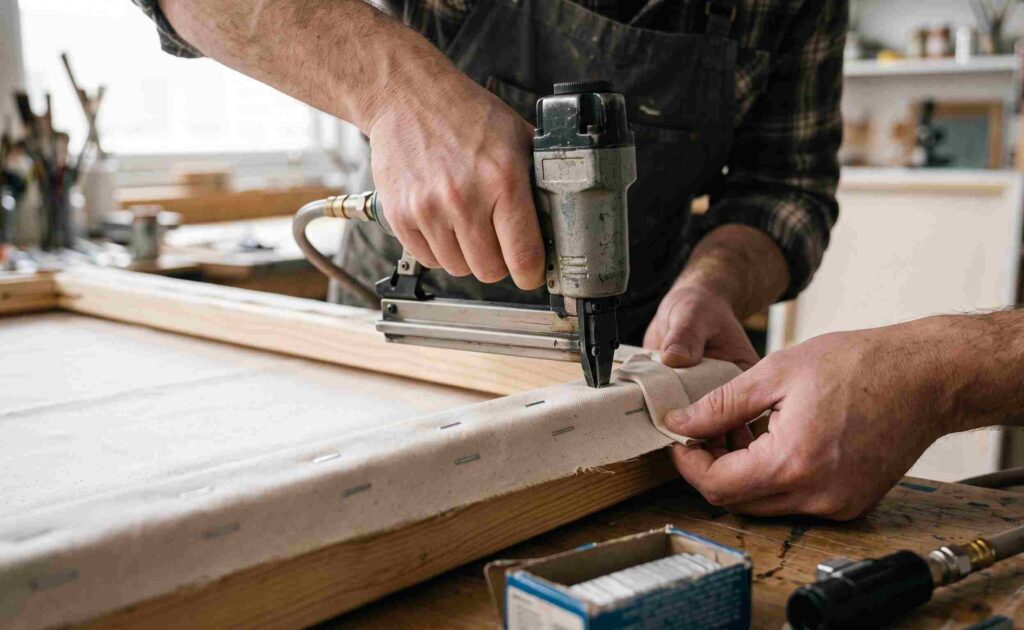
Stapling & Corner Folding
Once the correct tension has been achieved, the canvas is secured to the back of the stretcher bars using high-quality staples. The corners are then folded neatly to produce a clean gallery-quality finish.
Proper corner folding prevents excess material from gathering and gives the finished canvas a refined appearance.
Final Quality Inspection
Before delivery, every stretched canvas frame should undergo a thorough quality inspection. This includes checking the frame dimensions, corner alignment, canvas tension, staple placement, and overall finish.
A carefully inspected frame is more likely to remain stable during transport and provide years of reliable performance.
“A stretched canvas frame is only as good as the care taken during its manufacturing. Precision at every stage—from wood selection to final inspection—ensures your artwork remains beautifully displayed for many years.”
Why Manufacturing Quality Matters
Even the finest artist canvas cannot compensate for a poorly made frame. Inferior wood, inaccurate joints, or uneven stretching can lead to warped frames, loose canvas, and a shorter lifespan for your artwork. Investing in a professionally manufactured stretched canvas frame helps protect both the beauty and value of your painting.
We manufacture stretched canvas frames in custom sizes ranging from 3 inches to 96 inches, using premium stretcher bars and professional stretching techniques for artists, photographers, and print studios across India.
Types of Stretcher Bars
The stretcher bar is the structural foundation of every stretched canvas frame. While it remains hidden behind the artwork, it plays the most important role in determining the frame’s strength, stability, and longevity. A poorly designed stretcher bar can warp over time, causing the canvas to lose tension and affecting the appearance of the artwork.
At CanvasFrame.in, we manufacture different stretcher bar profiles to suit various artwork sizes and applications. Choosing the correct profile ensures your canvas remains flat, stable, and well-supported, whether you’re stretching a small painting for home décor or a large canvas for a gallery exhibition.
The right choice depends on several factors, including the canvas size, the weight of the artwork, the intended display environment, and whether additional cross braces are required.
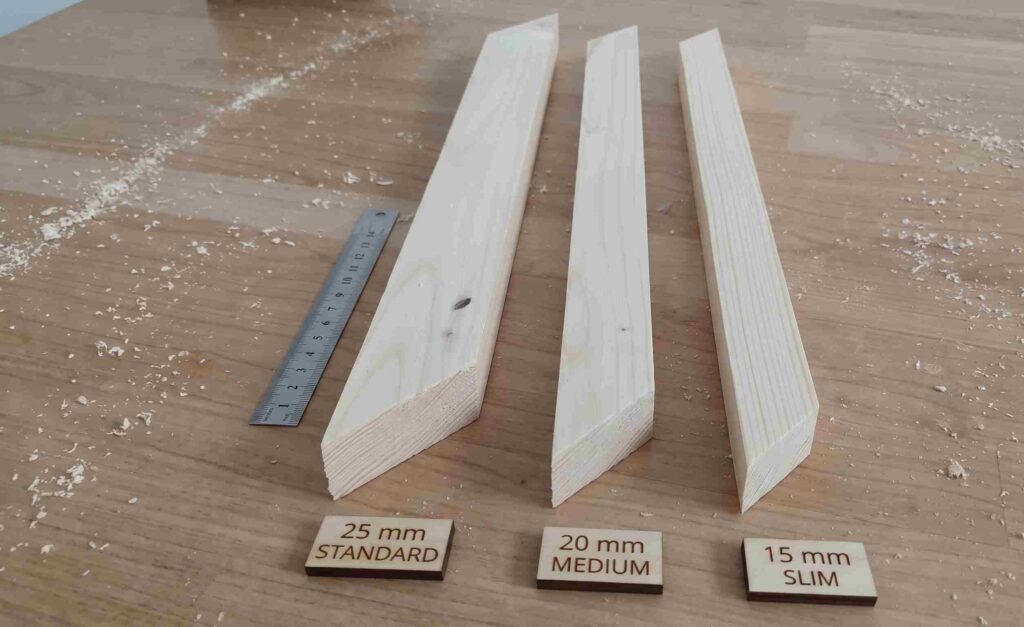
Our Stretcher Bar Profiles
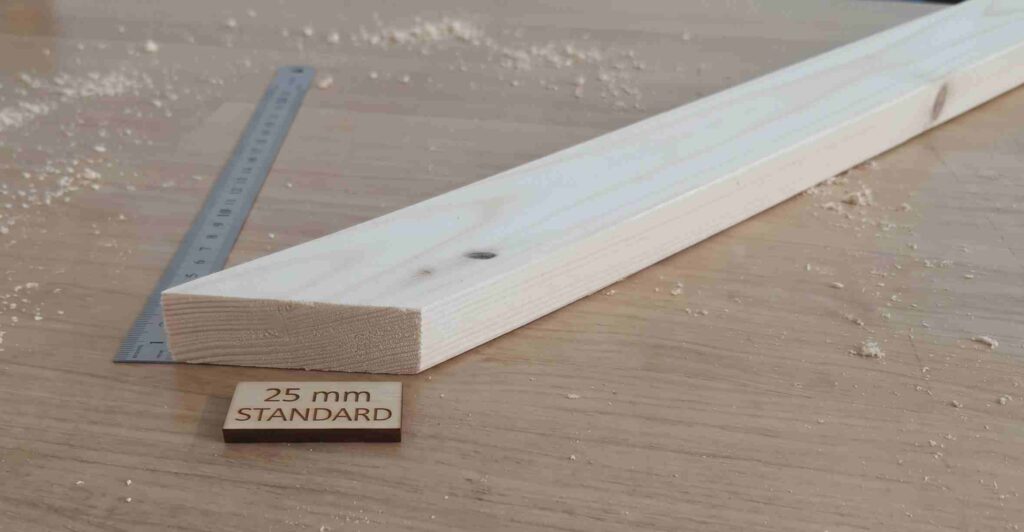
Standard Profile
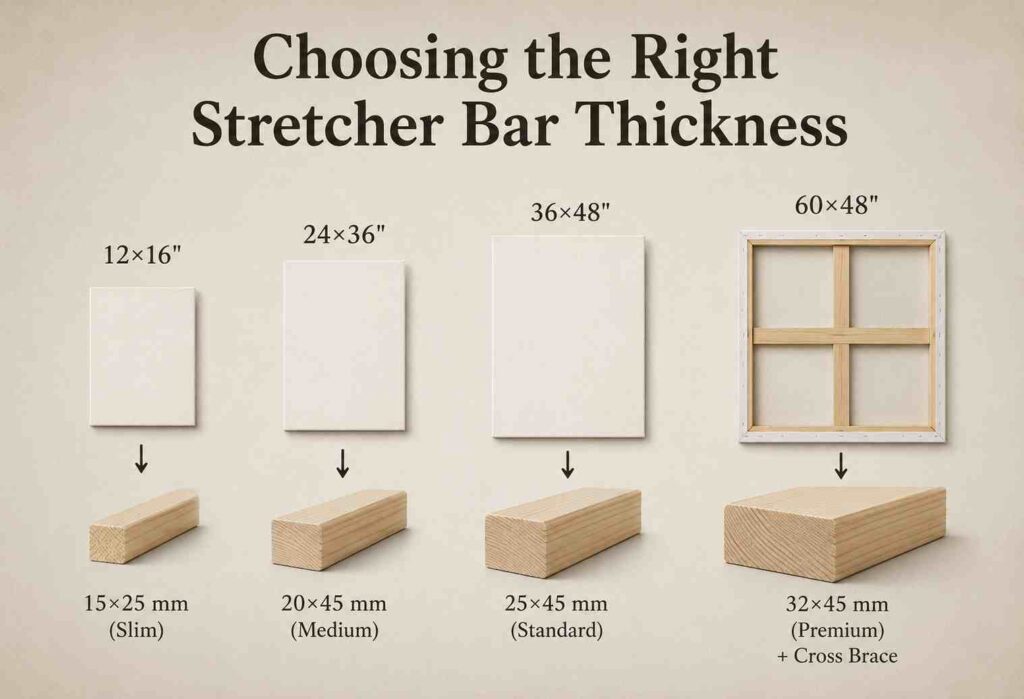
Suggested Size 25 × 45 mm
The Standard Profile is one of the most versatile stretcher bars and is widely used by professional artists. It offers an excellent balance between strength, durability, and weight, making it suitable for most original artworks.
This profile is ideal for customers looking for a premium-quality stretched canvas that will remain stable over many years.
Recommended Canvas Size
Up to 40 × 48 inches
Best For
1. Professional artists
2. Oil paintings
3. Acrylic paintings
4. Gallery display
5. Commissioned artwork
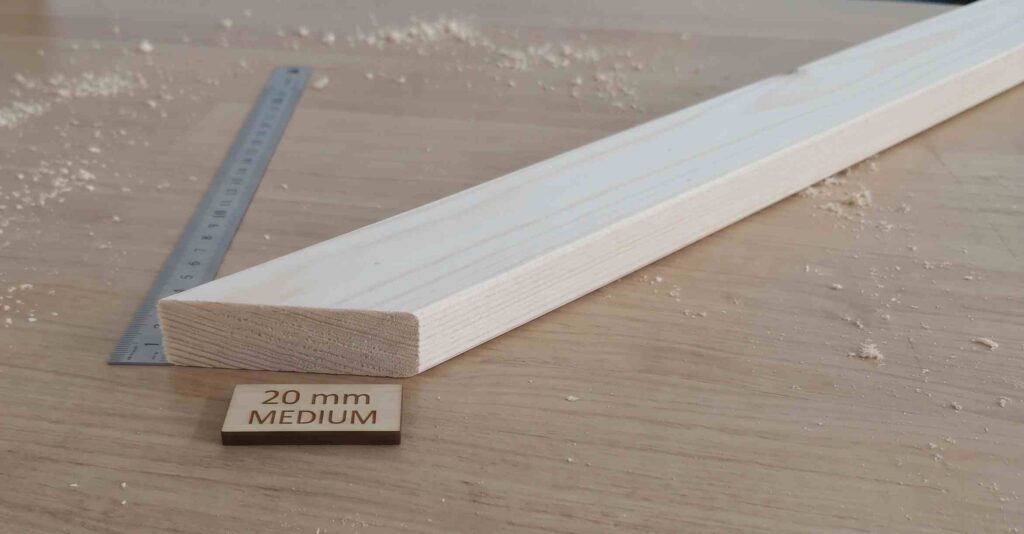
Light Profile
Suggested Size 20 × 45 mm
The Light Profile provides greater depth and rigidity while remaining lightweight. It is suitable for medium-sized paintings and photographic canvas prints where additional strength is beneficial without significantly increasing the overall weight.
Its deeper profile also creates a more substantial gallery appearance.
Recommended Canvas Size
Up to 24 × 36 inches
Best For
1. Acrylic paintings
2. Canvas prints
3. Home interiors
4. Office décor
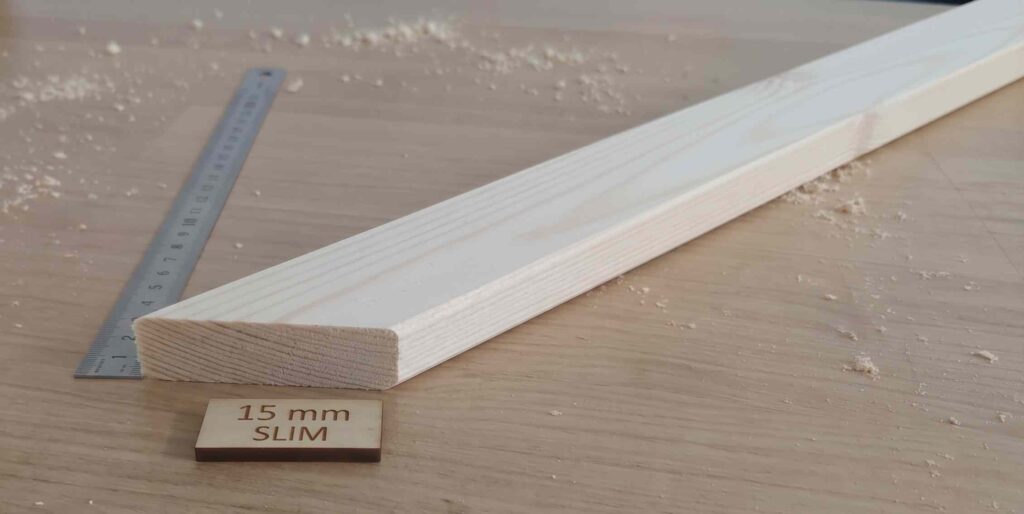
Economy Profile
Suggested Size 15 × 25 mm
The Economy Profile is designed for smaller canvases and lightweight artwork. Its compact dimensions make it an affordable option for students, hobby artists, quick studies, and decorative pieces.
It performs best on small-format canvases where structural loads are minimal. For larger artworks, a thicker profile is recommended to reduce the risk of bending over time.
Recommended Canvas Size
Up to 16 × 20 inches
Best For
1. Art students
2. Practice paintings
3. Lightweight canvas prints
4. Small home décor
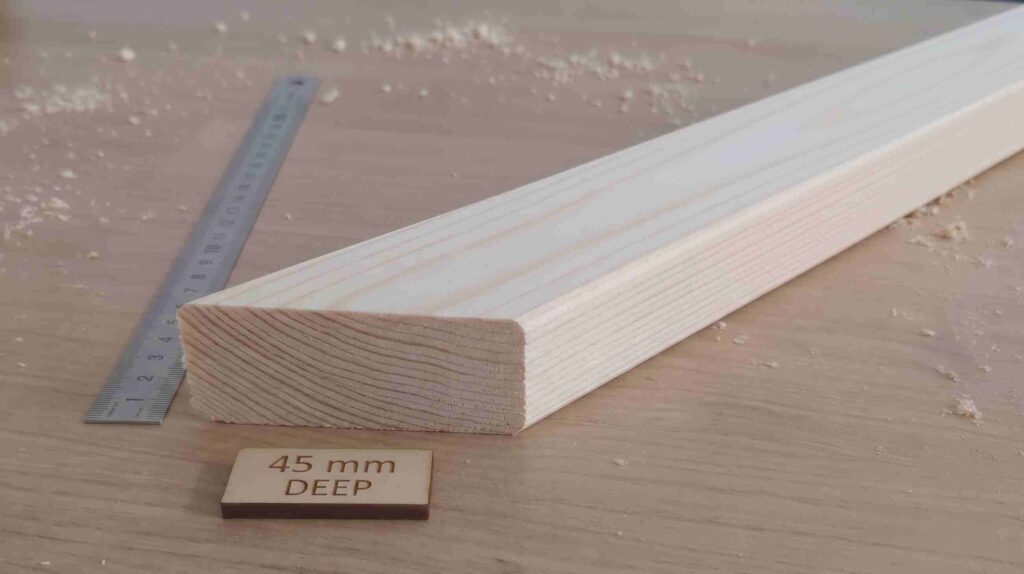
Premium Profile
Suggested Size 32 × 45 mm
The Premium Profile is engineered for large-format artwork where maximum strength and rigidity are essential. Its increased thickness provides outstanding resistance to twisting and bowing, especially when paired with cross braces.
This profile is recommended for oversized canvases, commercial installations, exhibitions, and museum-quality artwork.
Recommended Canvas Size
Above 40 × 48 inches
Best For
1. Large paintings
2. Oversized canvas prints
3. Exhibition artwork
4. Hotels
5. Corporate interiors
Museums
Profile | Typical Size | Recommended Artwork | Cross Brace |
|---|---|---|---|
Standard | 25 × 45 mm | Professional artwork | Recommended for larger sizes |
Light | 20 × 45 mm | Medium canvases | Optional |
Economy | 15 × 25 mm | Small paintings | Not required |
Premium | 32 × 45 mm | Large & oversized artwork | Strongly recommended |
Expert Recommendation
Many buyers focus only on the canvas fabric, but the stretcher bar profile is equally important. Choosing a profile that is too thin for a large canvas may lead to warping or loss of tension over time. For larger artworks, investing in a stronger profile provides better long-term stability and helps protect the artwork.
Need Help Choosing the Right Stretcher Bar?
Not sure which stretcher bar profile is best for your artwork? Our team can recommend the ideal frame based on your canvas size, artwork type, and display requirements.
How to Choose the Right Stretcher Bar Thickness
Choosing the correct stretcher bar thickness is just as important as selecting the right canvas. While thinner stretcher bars work well for smaller paintings, larger artworks require deeper and stronger profiles to prevent bending, twisting, or canvas sagging over time.
Many people assume that a thicker frame is only for aesthetics, but its primary purpose is structural support. As the size of a stretched canvas increases, the amount of tension pulling on the frame also increases. A deeper profile helps distribute this force evenly, keeping the frame square and the canvas tight for years.
At CanvasFrame.in, we recommend selecting the stretcher bar profile based on the overall dimensions of your artwork rather than simply choosing the least expensive option.
Why Thickness Matters
The thickness of a stretcher bar directly affects the strength and stability of a stretched canvas frame. Larger canvases create greater pulling force on the wooden frame, making it more susceptible to bending or twisting if the profile is too thin.
A properly selected profile offers several important benefits:
- Maintains consistent canvas tension.
- Reduces the risk of frame warping.
- Improves long-term durability.
- Supports heavier painted surfaces.
- Provides a stronger foundation for transportation and installation.
- Creates a premium gallery-quality appearance.
Selecting a profile that matches the size of your artwork ensures that your finished canvas remains flat, stable, and visually appealing for many years.
Small Artwork
Up to 16 × 20 inches
For small paintings and lightweight canvas prints, a 15 × 25 mm stretcher bar is generally sufficient. This profile keeps the frame lightweight while providing adequate support for smaller artwork.

Medium Artwork
16 × 20 to 24 × 36 inches
Medium-sized artwork benefits from the additional rigidity of a 20 × 45 mm profile. This depth helps maintain even tension while providing a more substantial gallery appearance.
Large Artwork
24 × 36 to 40 × 48 inches
Professional artists often choose a 25 × 45 mm profile for larger paintings. The added strength reduces flexing while providing excellent support for heavier oil and acrylic paintings.
Oversized Artwork
Above 40 × 48 inches
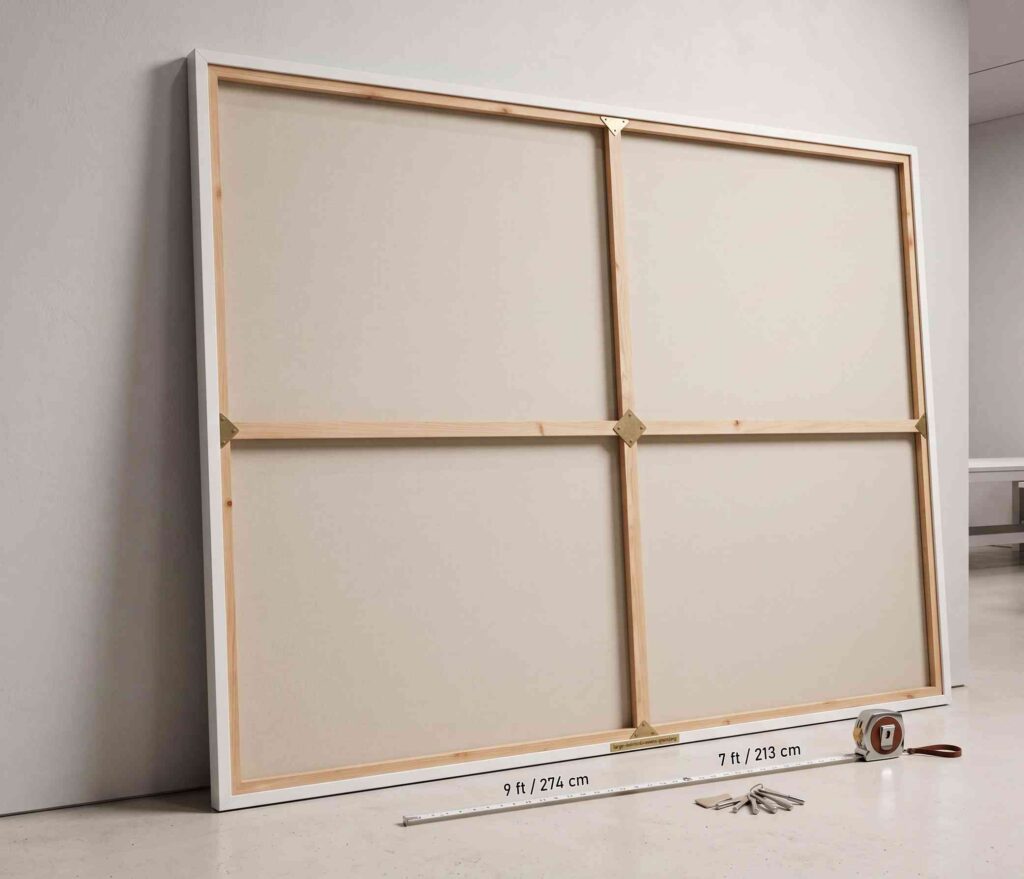
Oversized artwork should always use a 32 × 45 mm stretcher bar combined with one or more cross braces. This configuration significantly improves rigidity and helps prevent the frame from twisting during transport or long-term display.
Which Profile Should You Choose?
| Canvas Size | Suggested Profile | Cross Brace |
|---|---|---|
| Up to 16 × 20″ | 15 × 25 mm | No |
| 16 × 20″ – 24 × 36″ | 20 × 45 mm | Optional |
| 24 × 36″ – 40 × 48″ | 25 × 45 mm | Recommended |
| Above 40 × 48″ | 32 × 45 mm | Essential |
Did You Know?
A stretched canvas measuring 48 × 60 inches experiences significantly more tension than a 16 × 20 inch canvas. Even though the increase in dimensions may seem moderate, the larger surface area creates much greater stress on the wooden frame. This is why oversized canvases require thicker stretcher bars and cross braces to maintain their shape over time.
Manufacturer's Recommendation
If you’re unsure which profile to choose, it’s generally better to select a slightly stronger stretcher bar than one that is too thin. A stronger frame provides greater stability, especially if the artwork will be transported, displayed in changing environmental conditions, or intended for long-term preservation.
Need a Custom-Sized Stretched Canvas Frame?
We manufacture custom stretched canvas frames from 3 inches to 96 inches, with the appropriate stretcher bar profile recommended for every size.
Best Wood for Stretched Canvas Frames
The quality of the wood used in a stretched canvas frame has a direct impact on its strength, durability, and long-term performance. Even the finest canvas fabric cannot compensate for a poorly manufactured wooden frame. If the wood bends, twists, or warps over time, the canvas tension is affected, which can alter the appearance of the artwork and reduce its lifespan.
A good stretcher bar should be lightweight, dimensionally stable, and resistant to moisture-related movement. It should also be carefully seasoned so that it maintains its shape in different climates.
At CanvasFrame.in, wood selection is treated as one of the most important stages of the manufacturing process because a stable frame protects both the artwork and the investment made by the artist or customer.
What Makes a Good Stretcher Bar Wood?
Not all timber is suitable for manufacturing stretcher bars. The ideal wood should possess several characteristics that help maintain the structural integrity of the frame throughout its life.
A quality stretcher bar wood should be:
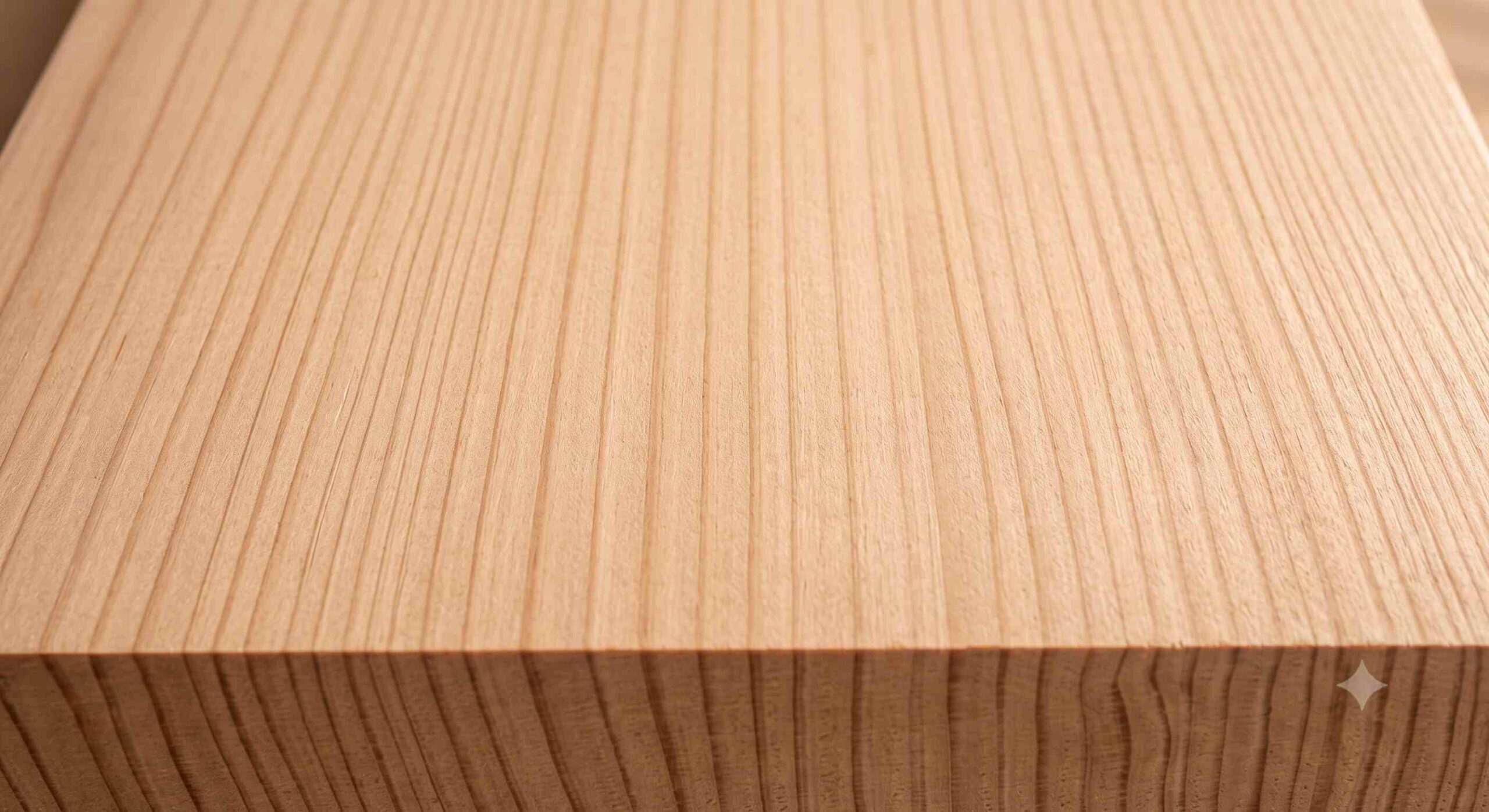
- Straight-grained for improved stability.
- Properly seasoned to reduce moisture content.
- Lightweight for easier handling.
- Strong enough to resist bending under canvas tension.
- Free from large knots and cracks.
- Resistant to warping and twisting.
- Smoothly machined to protect the canvas fabric.
These characteristics help ensure that the finished stretched canvas remains flat, square, and securely tensioned even after years of display.
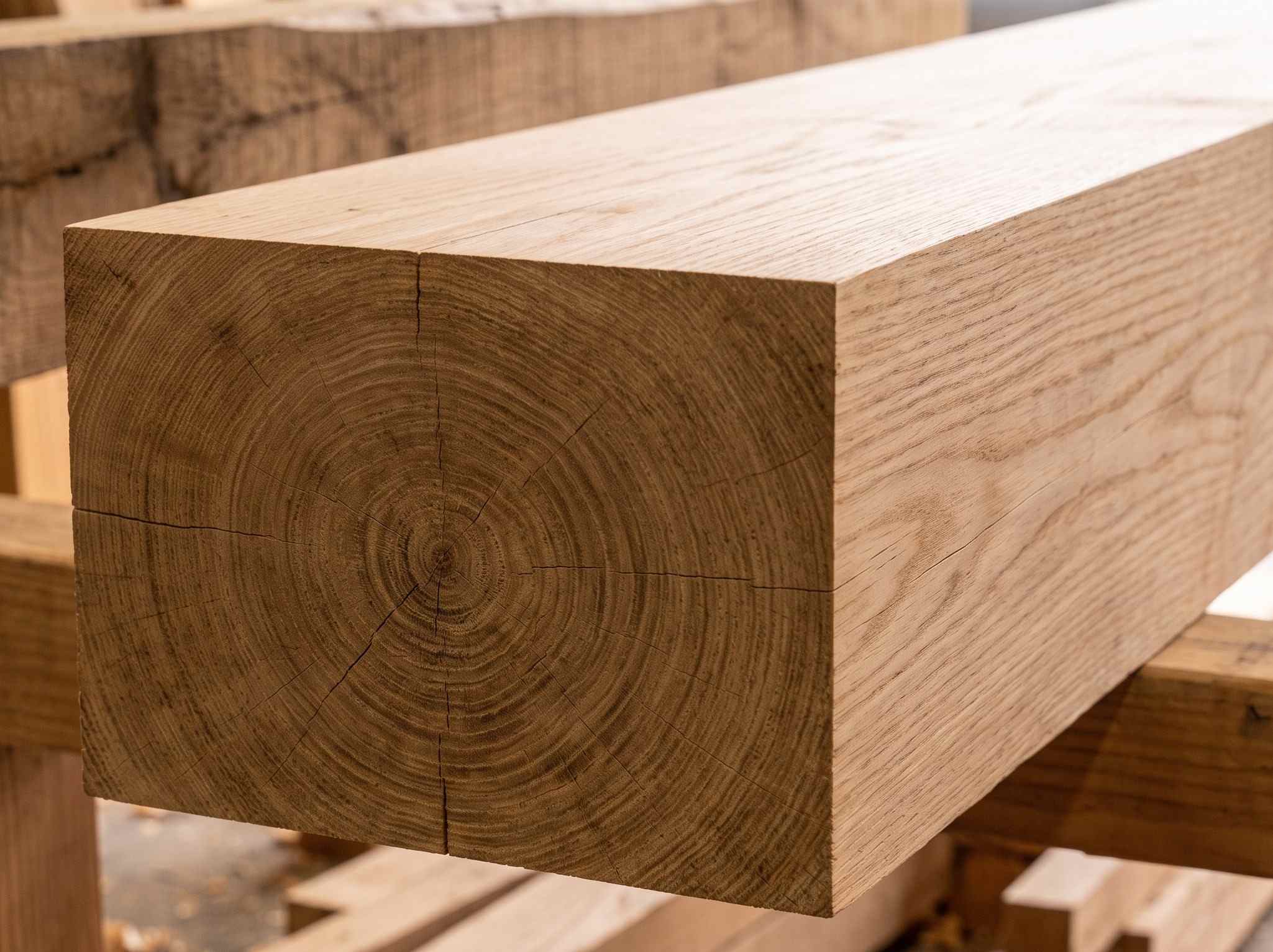
Straight Grain
Straight-grained wood offers greater strength and is less likely to twist than timber with irregular grain patterns.
Properly Seasoned
Seasoning removes excess moisture from the wood, reducing expansion and shrinkage caused by humidity changes.
Lightweight
A lighter stretcher bar is easier to transport and hang while still providing excellent structural support.
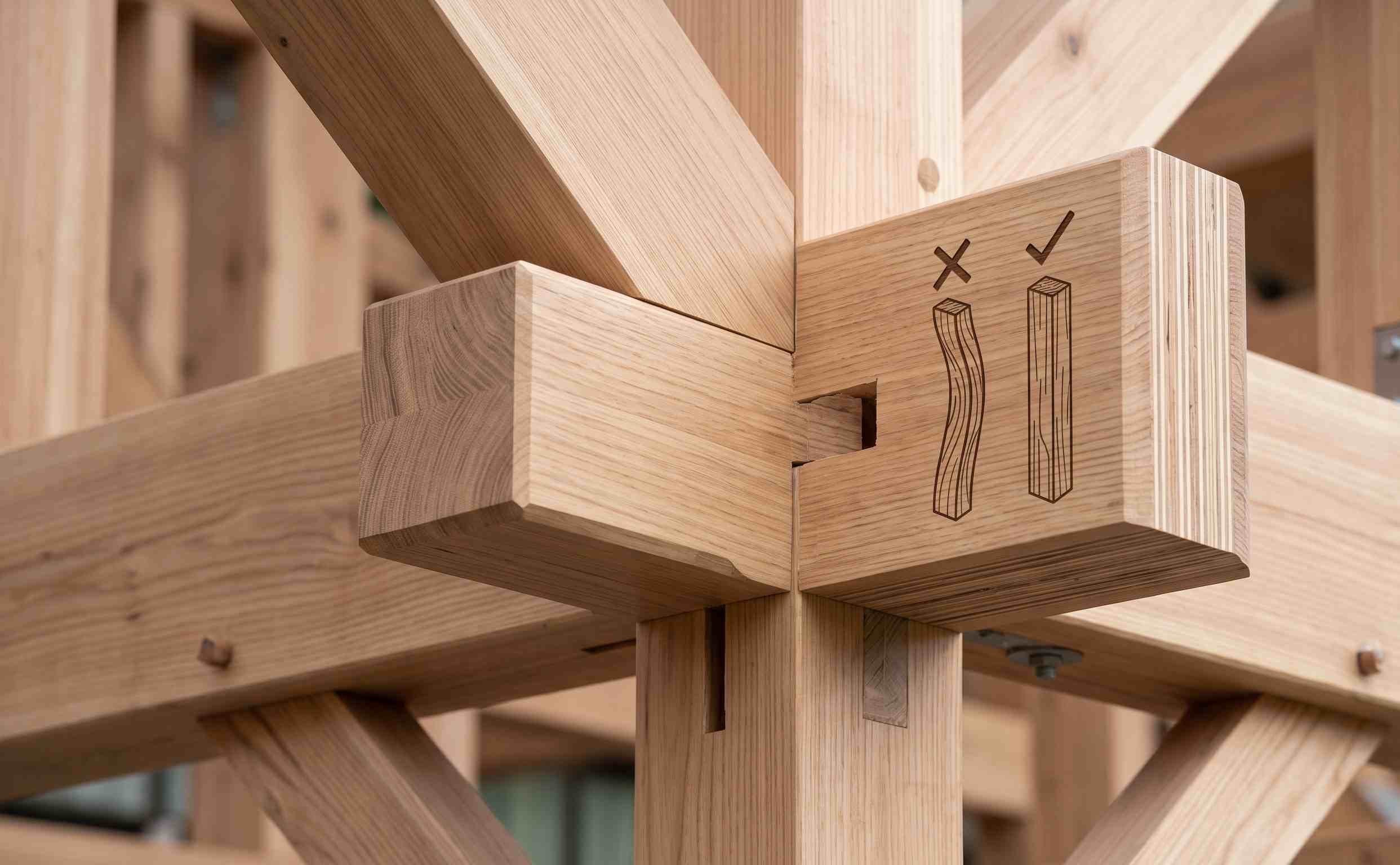
Warp Resistant
Proper manufacturing techniques and high-quality timber significantly reduce the chances of frame distortion over time.
Common Wood Types Used for Stretcher Bars
| Wood Type | Strength | Weight | Warp Resistance | Best For |
|---|---|---|---|---|
| Pine | ★★★★★ | Light | Excellent | Professional artists |
| Rubberwood | ★★★★☆ | Medium | Very Good | Large canvas frames |
| Hardwood | ★★★★★ | Heavy | Excellent | Specialty applications |
| MDF / Engineered Board | ★★☆☆☆ | Heavy | Poor | Not recommended for stretched canvas frames |
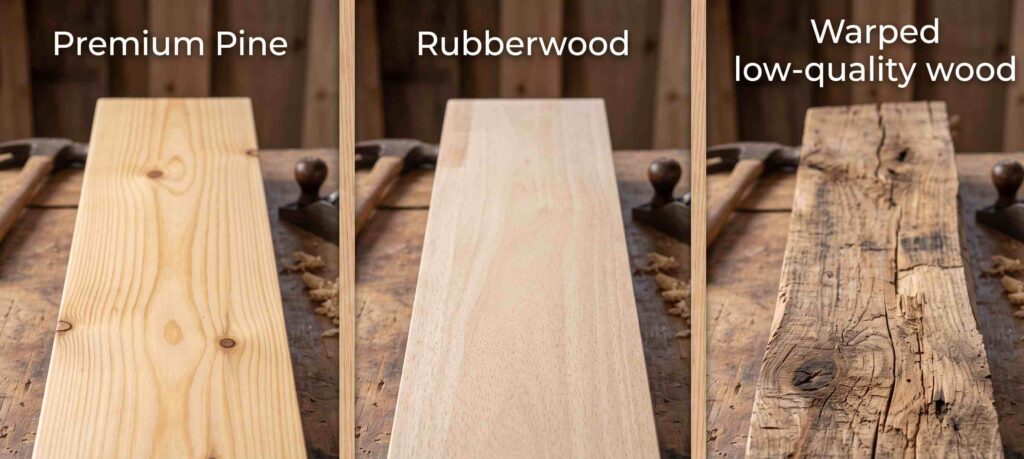
Among the various options available, seasoned pine is one of the most widely used materials for high-quality stretcher bars because it offers an excellent balance of strength, stability, workability, and weight. For larger or specialised applications, other hardwoods may also be suitable depending on the required strength and frame dimensions.
Common Mistake
Many inexpensive canvas frames are manufactured using unseasoned or low-grade timber. While they may look acceptable initially, these frames are more likely to twist, bow, or develop loose canvas tension over time. When purchasing a stretched canvas frame, always ask about the wood quality—not just the canvas fabric.
Expert Insight from CanvasFrame.in
The performance of a stretched canvas frame depends on the combination of quality timber, precise machining, accurate joints, and professional canvas stretching. Selecting premium wood is the first step, but careful manufacturing ensures that every component works together to create a frame that remains stable and reliable for years.
Looking for Premium Wooden Stretcher Bars?
Our handcrafted stretcher bars are manufactured using carefully selected timber, precision-machined profiles, and professional quality standards suitable for artists, photographers, galleries, and canvas print studios.
Canvas Fabric Types: Choosing the Right Canvas for Your Artwork
A stretched canvas frame is only one part of the finished artwork—the canvas fabric itself is equally important. Different canvas materials offer different textures, absorb paint differently, and influence both the appearance and longevity of the artwork.
Whether you’re creating an oil painting, an acrylic masterpiece, a mixed-media project, or a premium canvas print, choosing the right canvas fabric ensures better painting performance and long-term durability.
The most common canvas materials used today are cotton canvas, linen canvas, and poly-cotton canvas. Each has unique characteristics and is suitable for different applications.
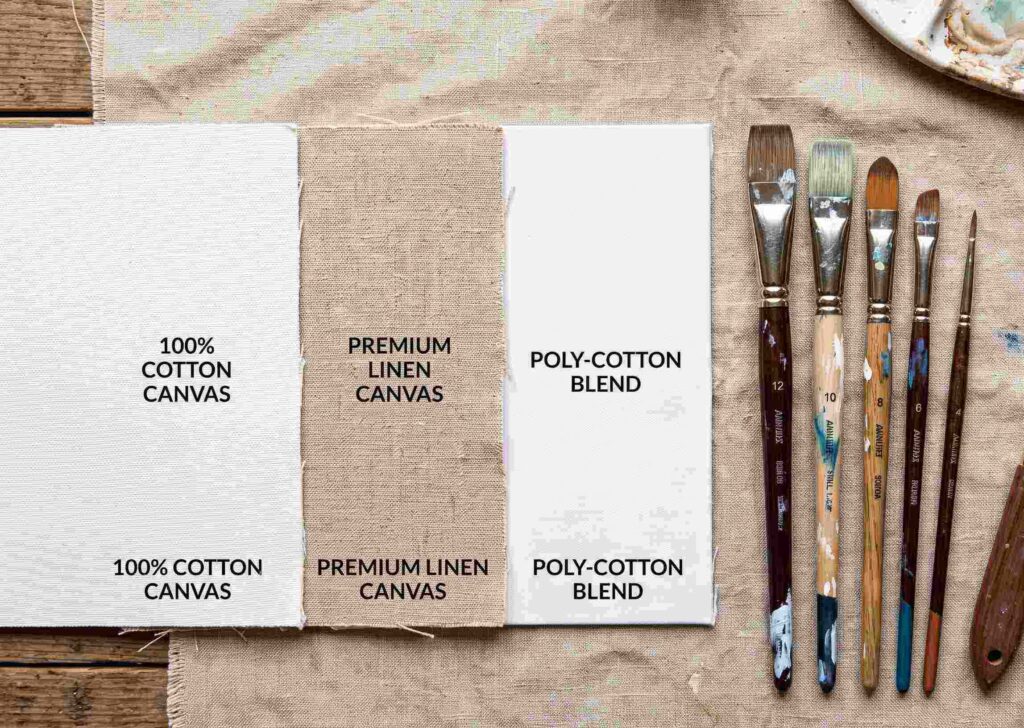
Cotton Canvas

Cotton canvas is the most widely used material for artist canvases because it offers an excellent balance between quality, affordability, and versatility. It provides a smooth, consistent surface suitable for a wide range of painting techniques and is available in different weave textures.
Cotton canvas performs exceptionally well for:
- Acrylic painting
- Oil painting
- Mixed media
- Student artwork
- Decorative wall art
- Canvas prints
Advantages
✔ Affordable
✔ Lightweight
✔ Easy to stretch
✔ Smooth painting surface
✔ Excellent v
Cotton canvas is the most widely used material for artist canvases because it offers an excellent balance between quality, affordability, and versatility. It provides a smooth, consistent surface suitable for a wide range of painting techniques and is available in different weave textures.
Cotton canvas performs exceptionally well for:
- Acrylic painting
- Oil painting
- Mixed media
- Student artwork
- Decorative wall art
- Canvas prints
Advantages
✔ Affordable
✔ Lightweight
✔ Easy to stretch
✔ Smooth painting surface
✔ Excellent value